We tied up in Malaga around 8am and were off exploring around 8:30.
Malaga has a bit of a European Surfers Paradise feel: lots of highrise apartments and they have to replace the sand on the beach every year.
First stop was at the top of the hill overlooking the city.
While a pretty place there is not a lot of places of interest outside of;
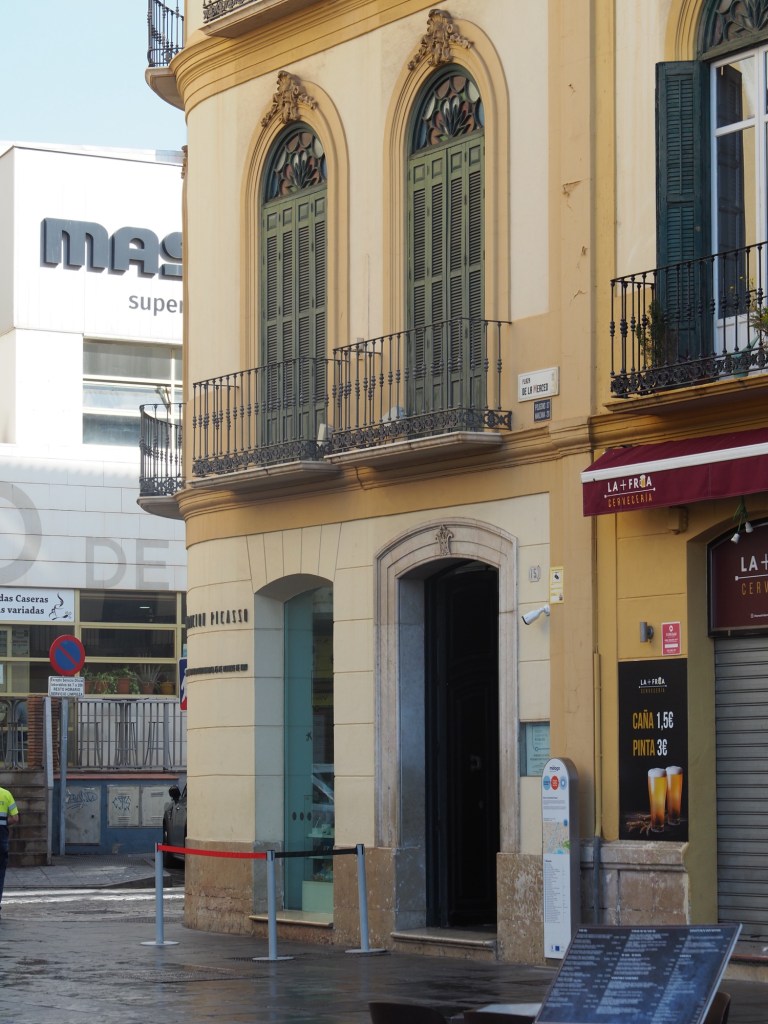
The house where Pablo Picasso lived till he was nine.
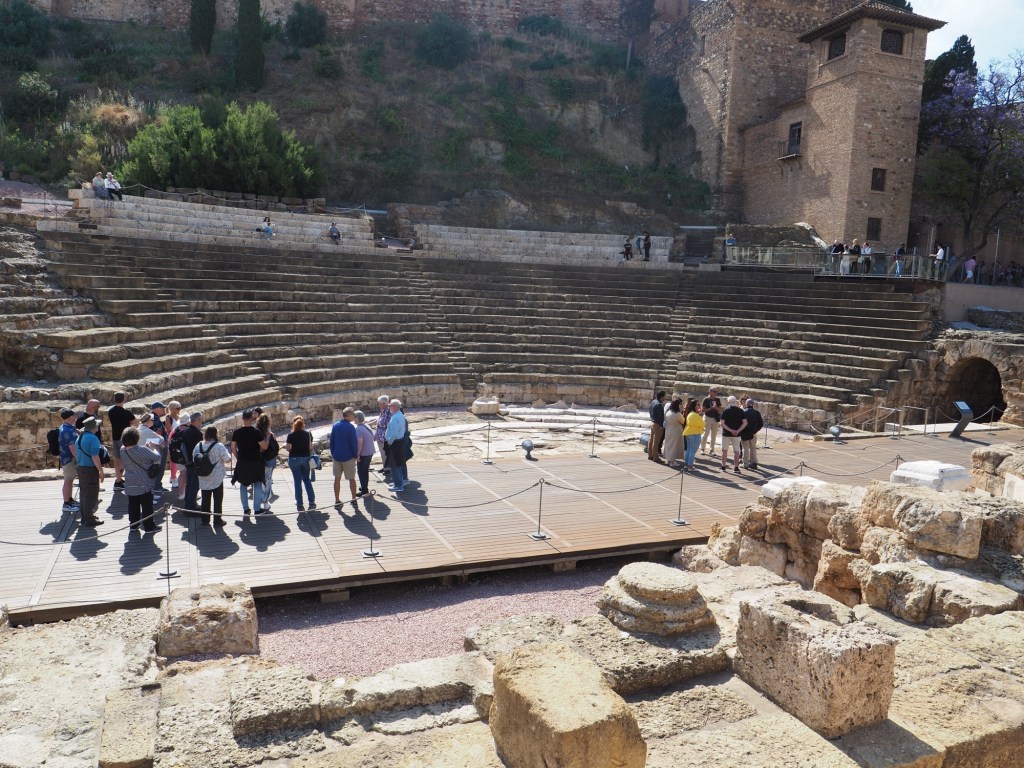
A Roman amphitheatre they discovered in the 1970s when they were digging the foundations of a library, and
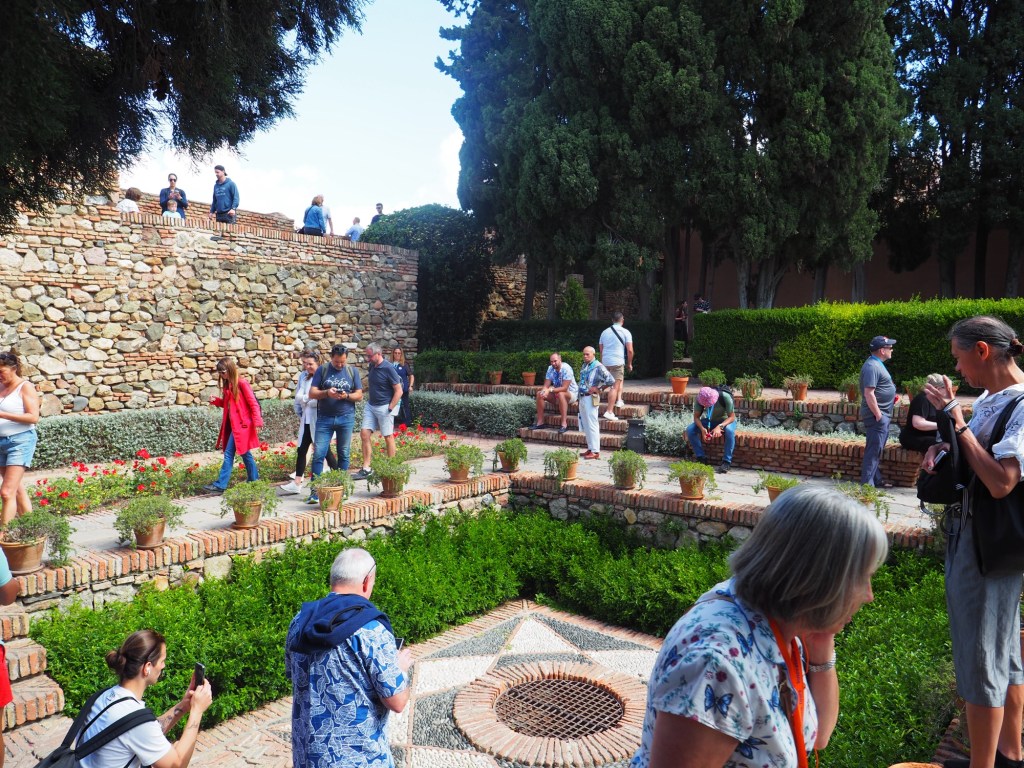
the Alcazaba fort which was built by the Moors in the 11th Century .
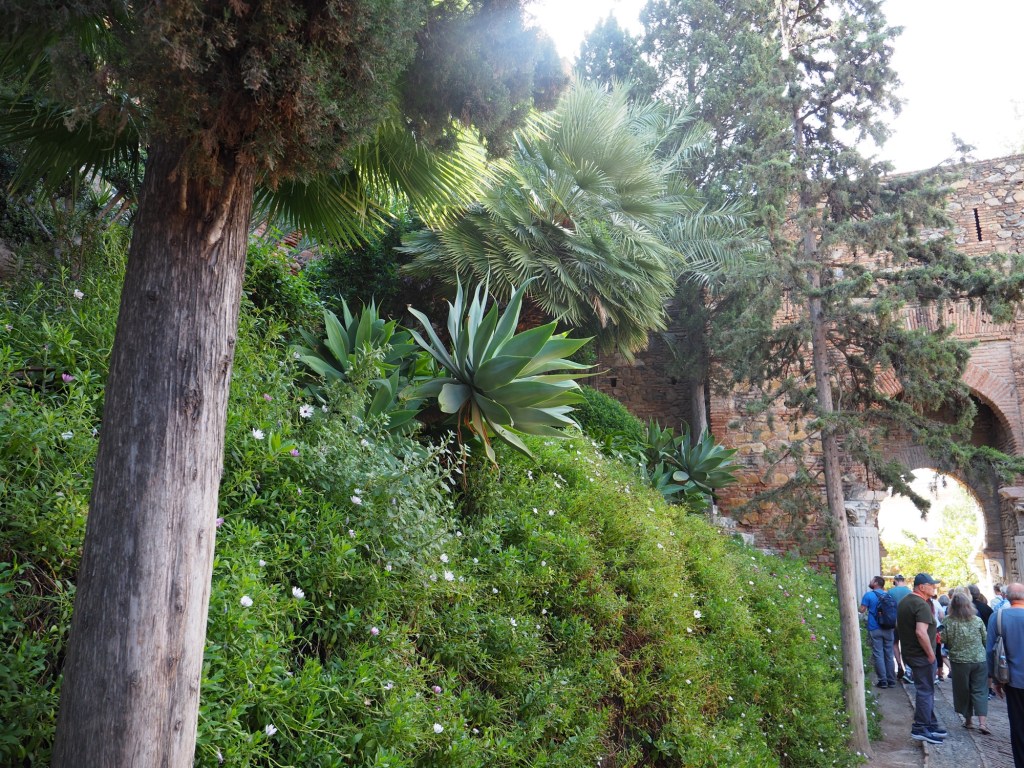
This is an amazing structure which sits on the top of a hill dominating the city. Inside is a labyrinth of passageways, gardens and running water.
Oh and I forgot, there is actually a fourth wonder. The guy that played Zorro in the last Hollywood version of that movie was born here and has retired back to this town.
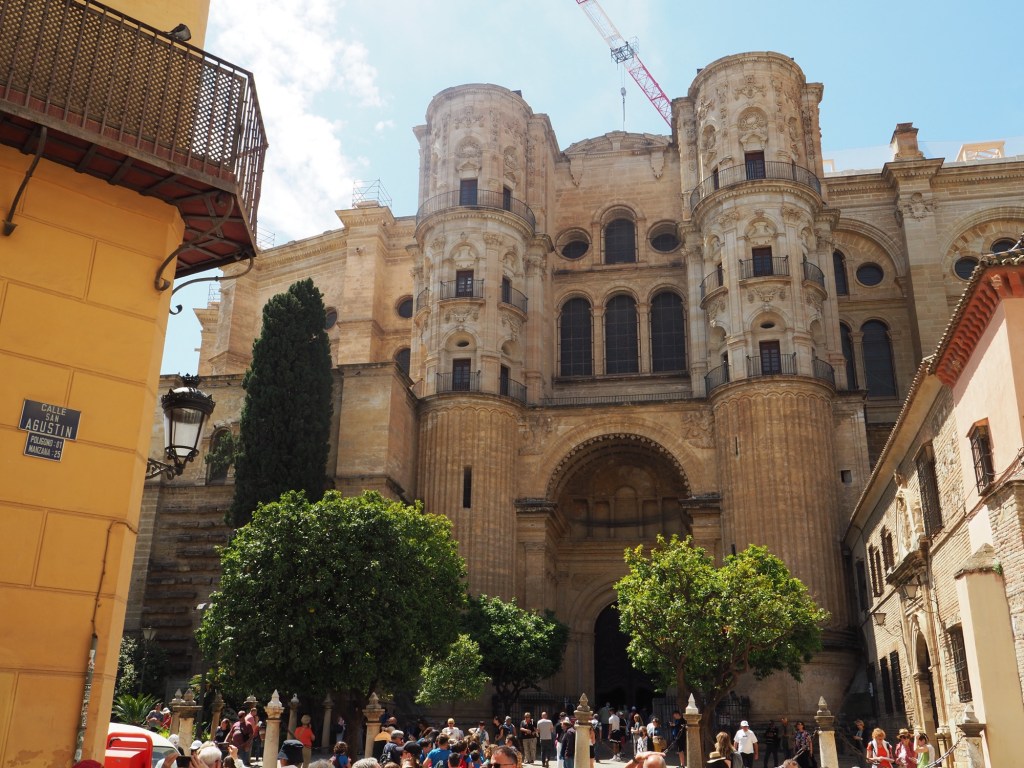
Outside of this there is not much more I can tell you about Malaga apart from the fact they started building the cathedral in 1352 and haven’t finished it yet. They are currently working on the roof.
We docked in the beautiful city of Cadiz around 8am and we were off the ship at 8:30 to pick up our tour.
Ah Cadiz, a beautiful elegant city where the breezes blow and the palm trees grow and the feeling is laid back. Unfortunately we were on a small bus heading inland to the town of Jerez.
Jerez has its occasional moments but it’s no Cadiz . There is a famous Spanish riding school here and a number of large industrial conglomerations called Bodegas which produce sherry and brandy. Interestingly, as well as lots of high roofed factory buildings, some of these Bodegas featured elaborate treed parklands. These date from the time that they were family owned and the owners would live on site.
One notable feature, it has what is said to be the largest weather vane in Europe so that might be worth noting for triva nights.
Fortunately we eventually headed back to beautiful Cadiz. Our guide had a heavy accent and had a tendency to not only give you the history of a particular building on any given site but also all the buildings on that site that had preceded it. Given that the town had been founded by the Phoenicians, conquered by the Romans, then the Vandals, then the Moors and finally by the Spanish, you can appreciate that our progress was rather glacial.
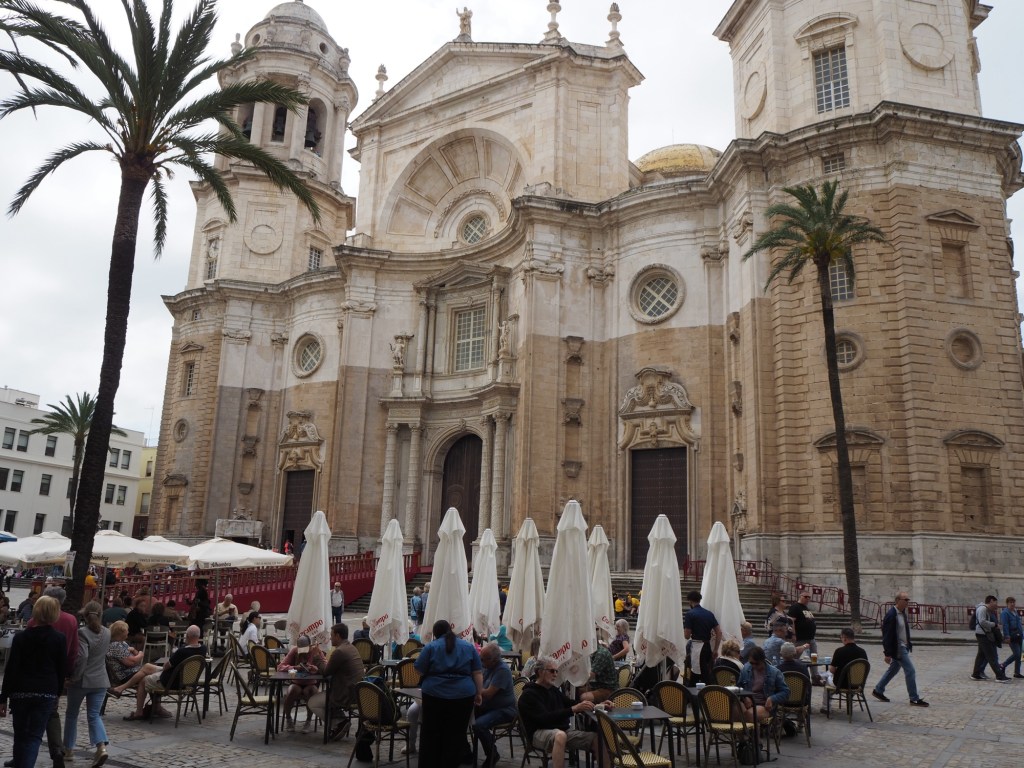
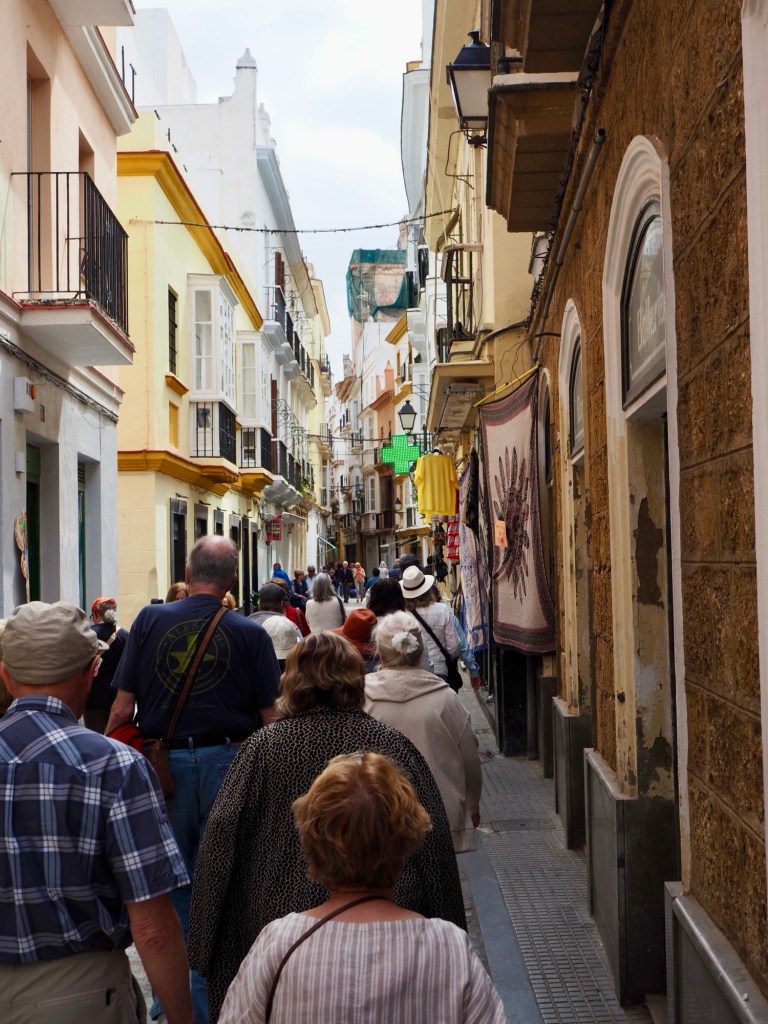
The old town is trully beautiful. The cathedral is stunning. Jeanette noted there was a lightness and joyfulness there that you don’t find elsewhere.
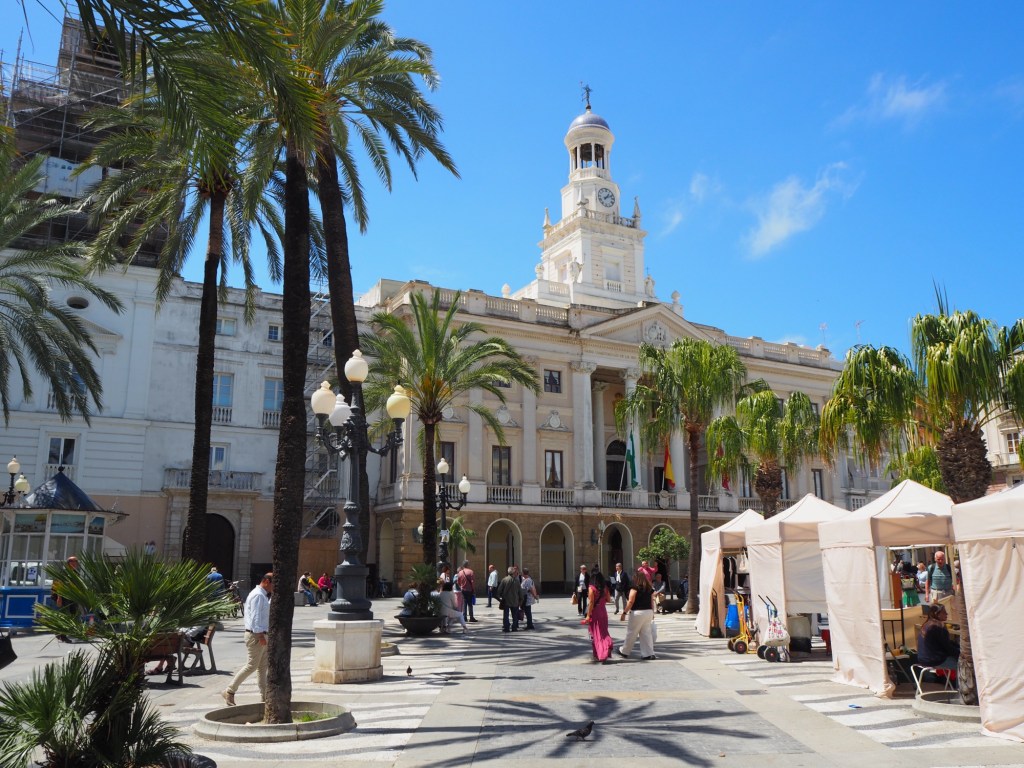
Elegant palm trees flank the boulevards. The buildings are painted in light greys and yellows and pinks. The squares, market places and alleys are full of people. The sun was warm and the winds gentle and they do a fabulous coffee.
The beauty of sea days is that not a lot happens. Today, there was breakfast, a couple of lectures, lunch and then some reading till the Captain’s cocktail party at 5 then dinner, a show and bed.
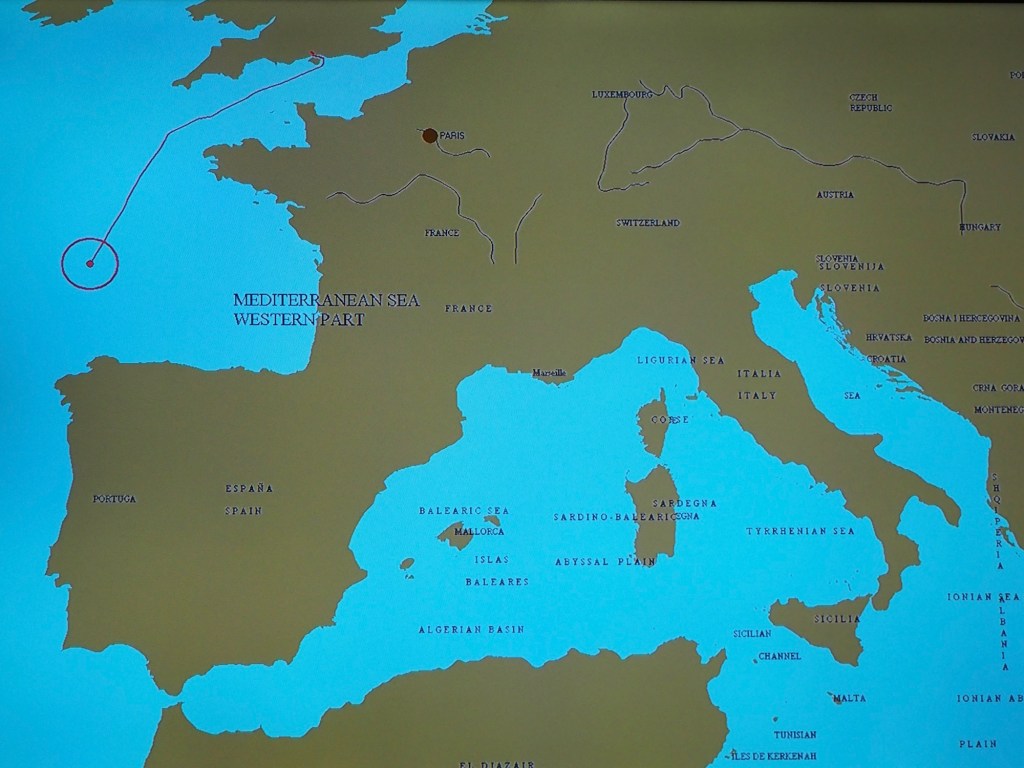
We are however, as can be seen from the map, making steady progress to our first destination, the City of Cadiz. We are due to dock there around 8am tomorrow.
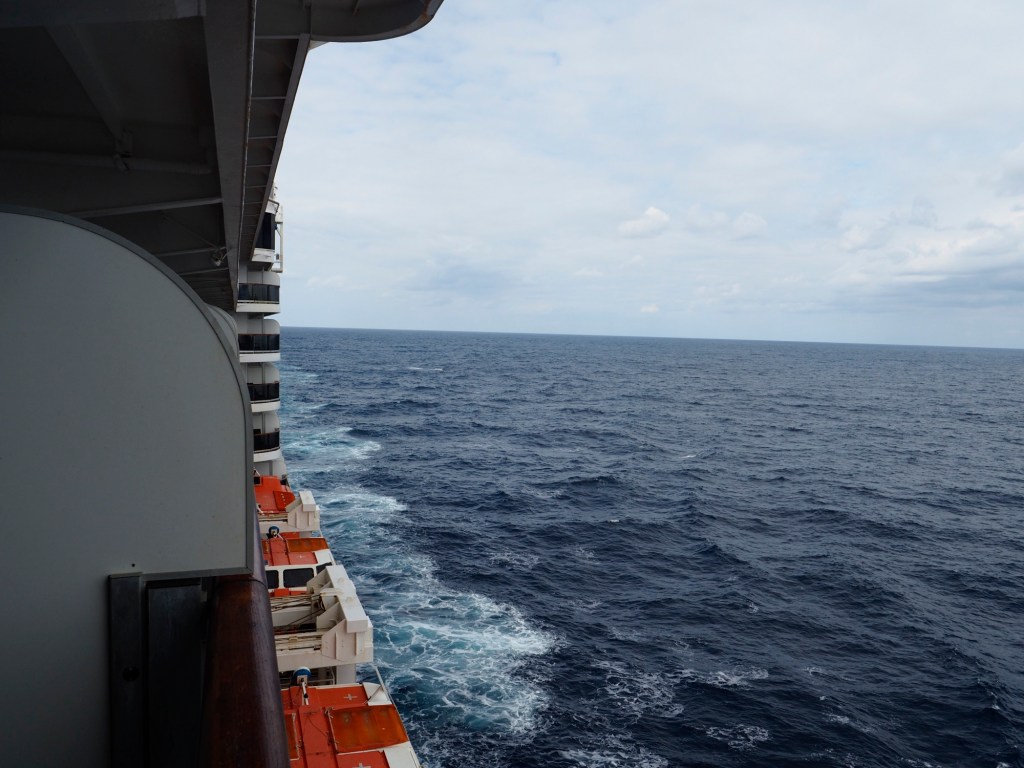
Today was our first sea day as we made our way down the English Channel and across the Bay of Biscay.
To give you some idea of the progress we are making, this was our position around 4pm local time today.
We have filled the day reading and we both went to a very interesting talk by a history professor on smuggling on the Cornish coast. Later in the day we were having a coffee in a rather full area and this couple came up and asked if they could use the two spare seats at our table. We got chatting and after a bit of information was exchanged, finally realised that the lady was the professor who had done the lecture.
Jeanette went to two other lectures, one from a former BBC Royal reporter and another from a guy who set up computerised crime databases.
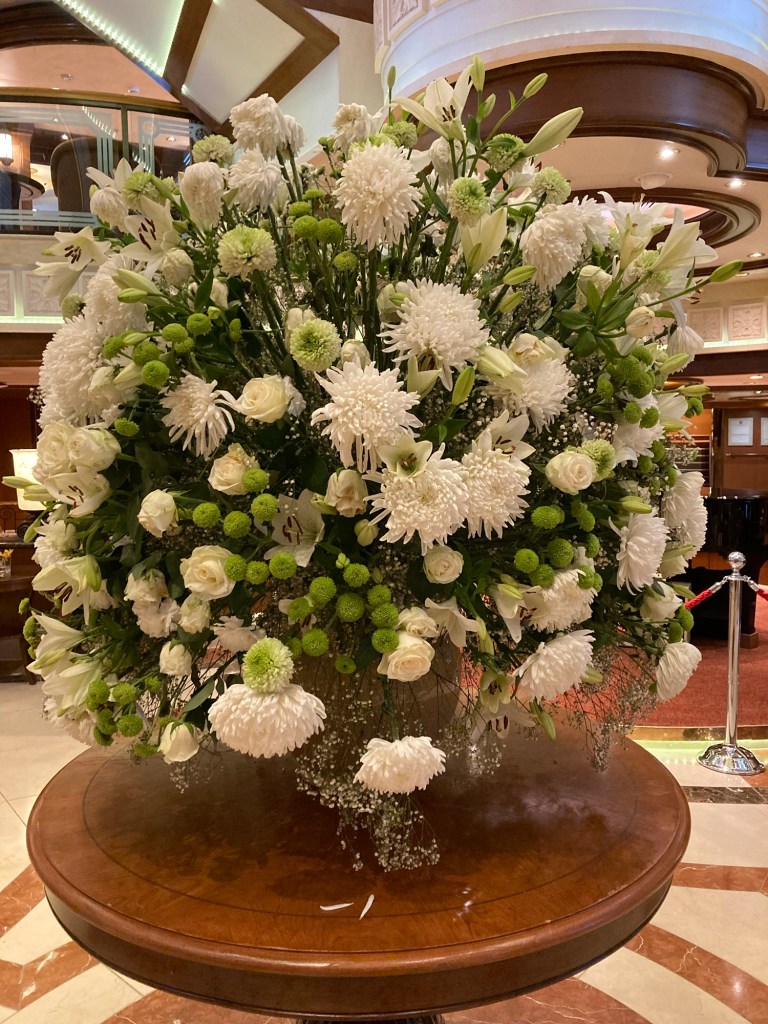
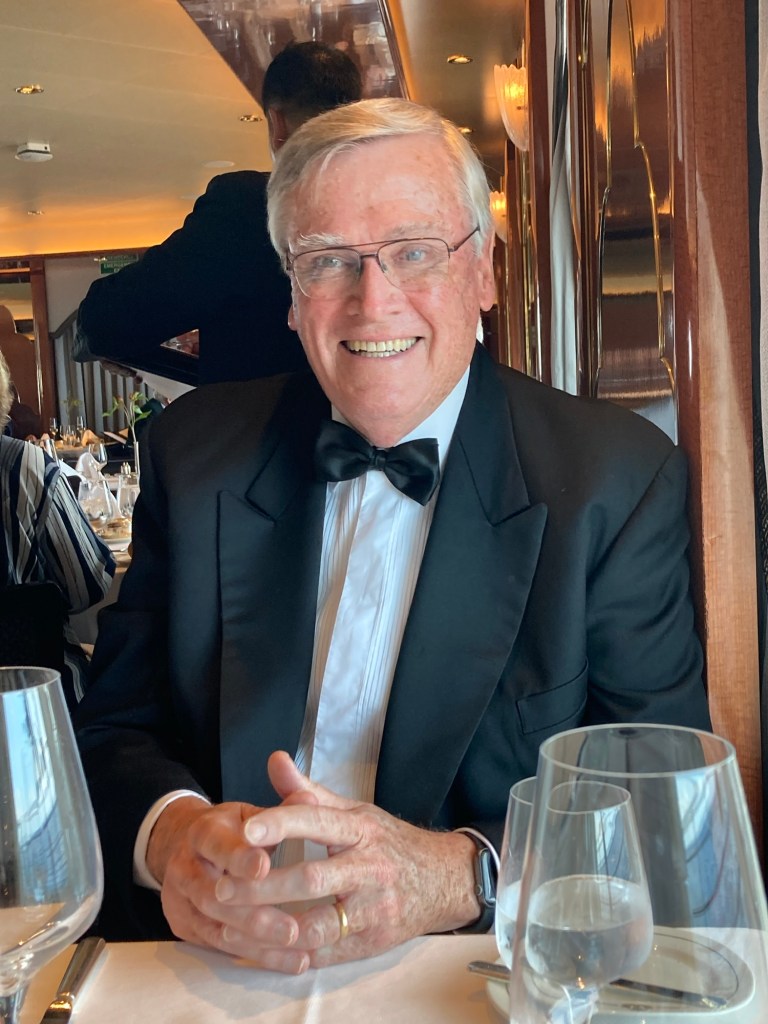
Tonight was our first themed gala night, this one was Black and White so everybody was out in evening dress with a black and white theme.
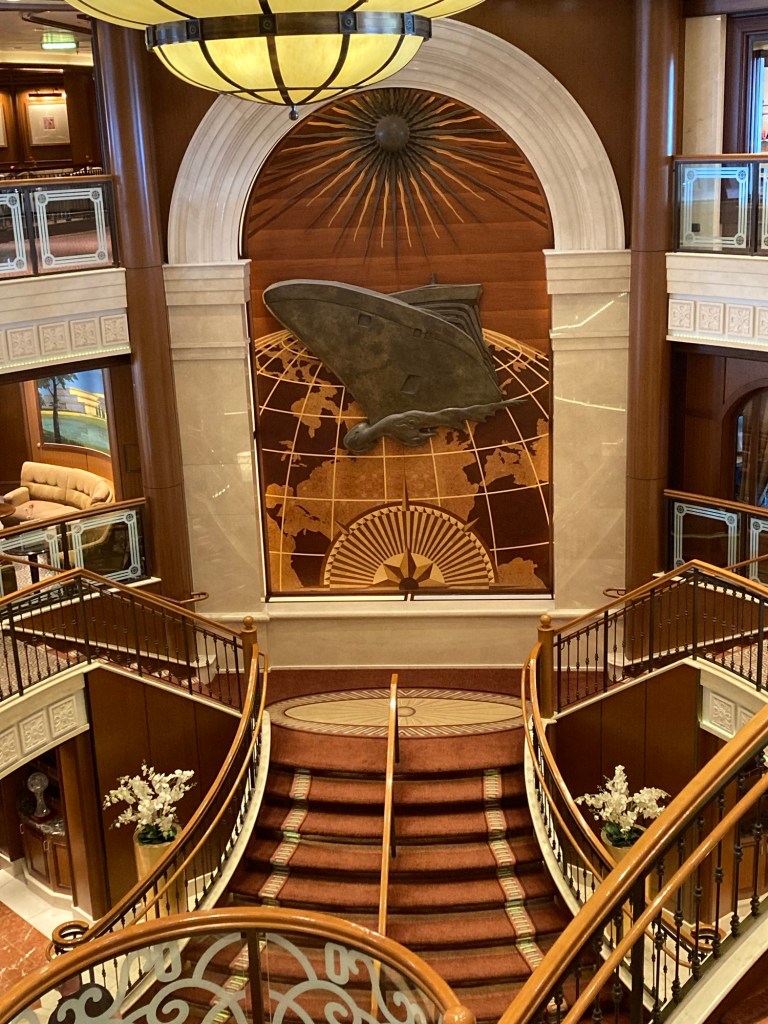
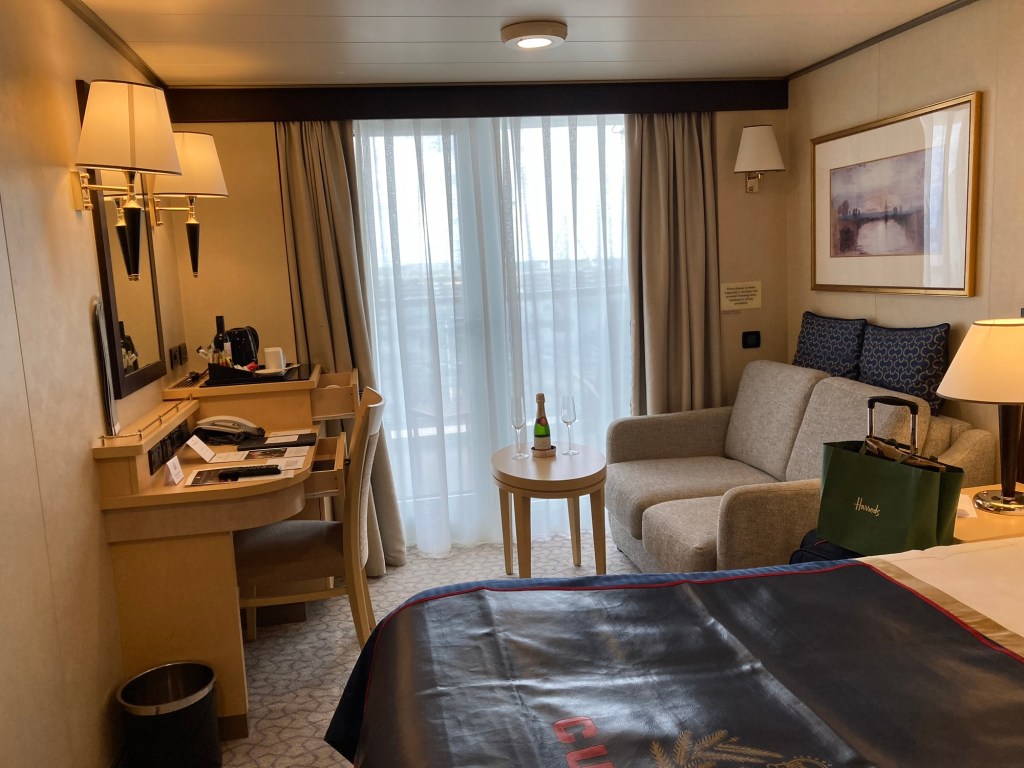
Around 11am we farewelled our hotel and took a two hour drive down to Southhampton to join the Queen Victoria. At Southhampton docks, the process of leaving our car, dropping our large bags, getting thru the security check and on to the ship went like a fast moving conveyor belt and before we knew it we were on the ship and standing at the door of our assigned cabin. I hadn’t had time to get the camera out.
Unfortunately at this point, the system started glitching a bit. There was supposed to be an envelope at our door with the card keys to our room in it. Unfortunately all we found was an empty envelope. Jeanette dashed down to the Purser’s deck, got replacement keys and we finally made it into our cabin.
There were 6 on our table for dinner, a Ukrainian couple, a couple from the Gold Coast and of course us. We all seemed to hit it off well.
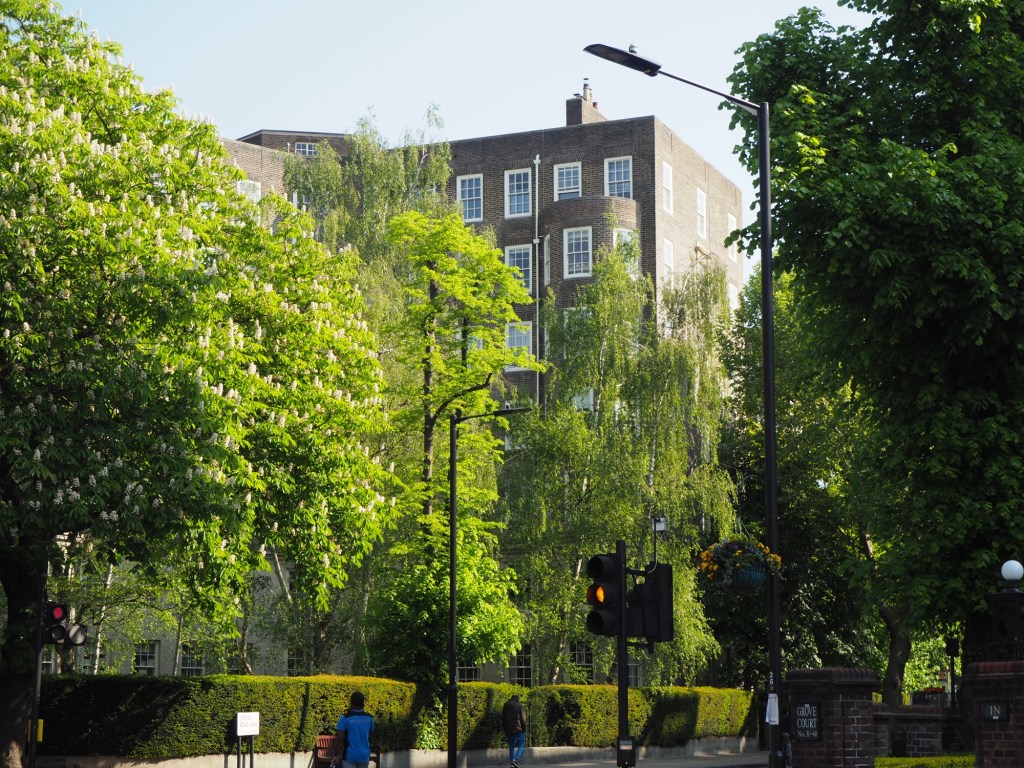
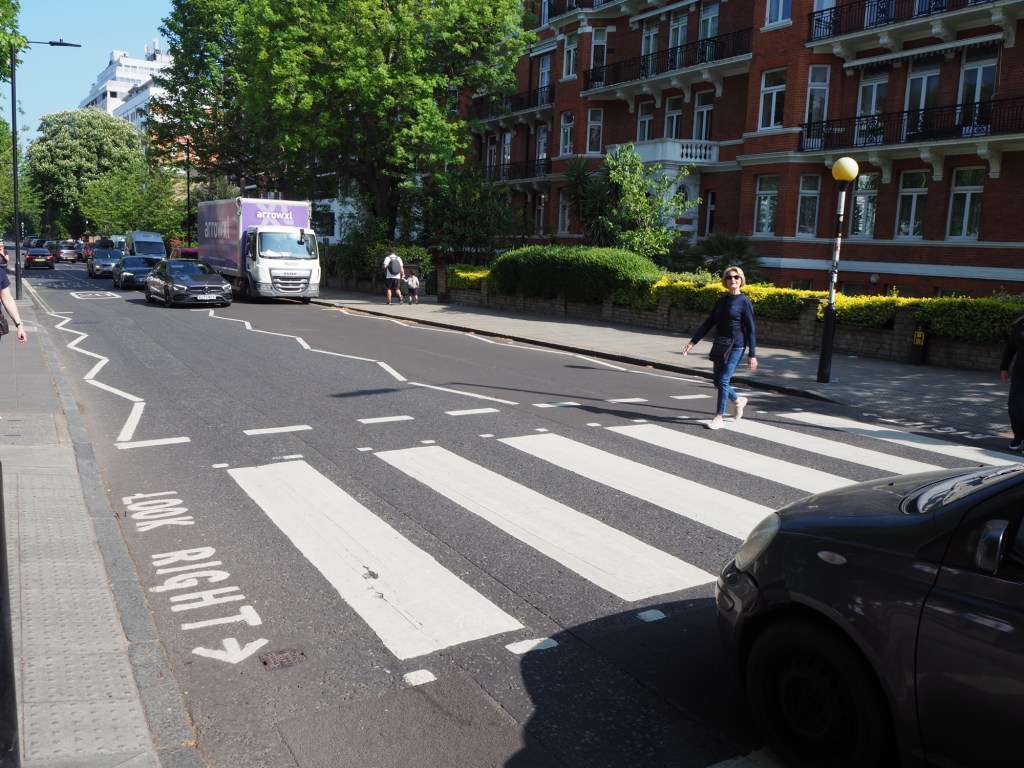
We decided to head out today to Abbey Road to see the famous pedestrian crossing of Beatles fame. It was a 35 minute walk from our hotel and we passed down treed streets filled with elegant pre war apartment blocks.
Arriving at the famous crossing, there was a large crowd already there, all intent on recreating the album cover shot and delaying the traffic in the process. The motorists all seemed to be fairly laid back about this as I guess this is a daily occurrence.
We then went on to see recently discovered ruins of a Roman Temple to the God Mithras. I have to confess this was fairly underwhelming. The museum staff did their best to prop up the experience by making you enter the room in almost total darkness and turning the lights up slowly while playing recordings of people talking in Latin but ‘nah’.
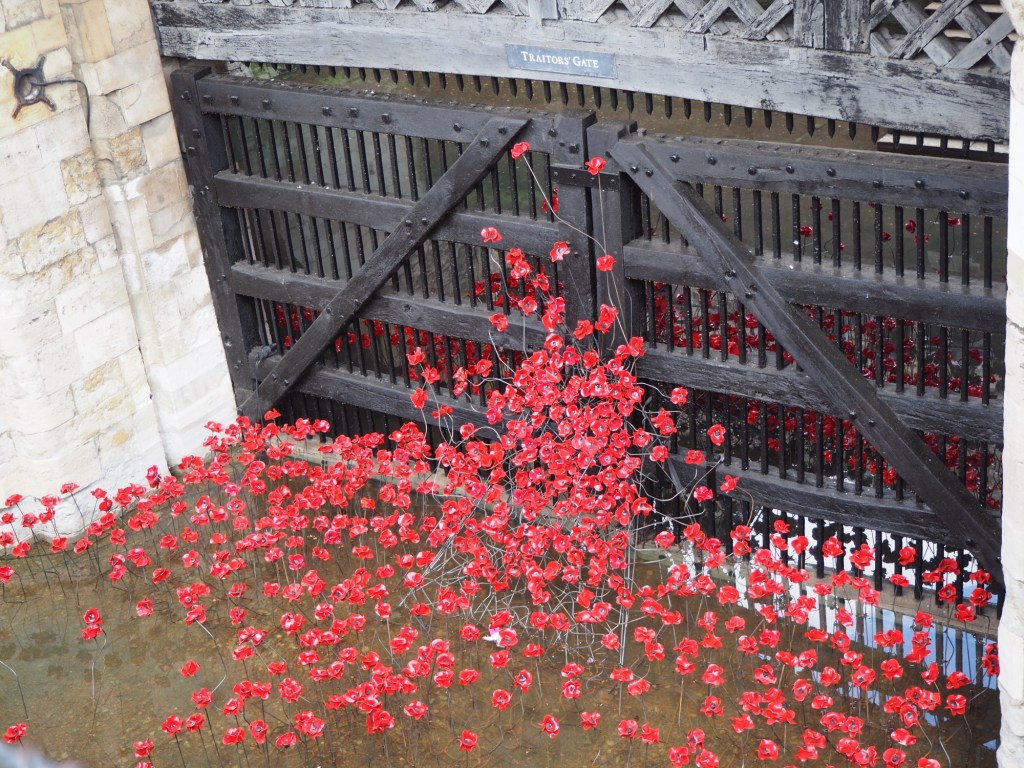
We then wandered around to the Tower of London. Jeanette had heard of the poppy installation they were doing to mark 80 years since the end of WWII and wanted to see it . Unfortunately this was still a work in progress but we managed to see a little bit around Traitors Gate.
We grabbed lunch in a lovely nearby cafe then Jeanette headed off to Oxford and Regent streets for some retail therapy.
Evening meal tonight was at our favourite Italian restaurant and on our way home checked out the statue of Paddington Bear …
Today we hopped on the Bakerloo Line and headed down to have a walk in the gardens and along the Thames Embankment. We have noted in some areas that London seems to be fraying a bit around the edges from what we remembered from previous visits. The train we caught was a rather extreme example of this being graffitied both inside and out.
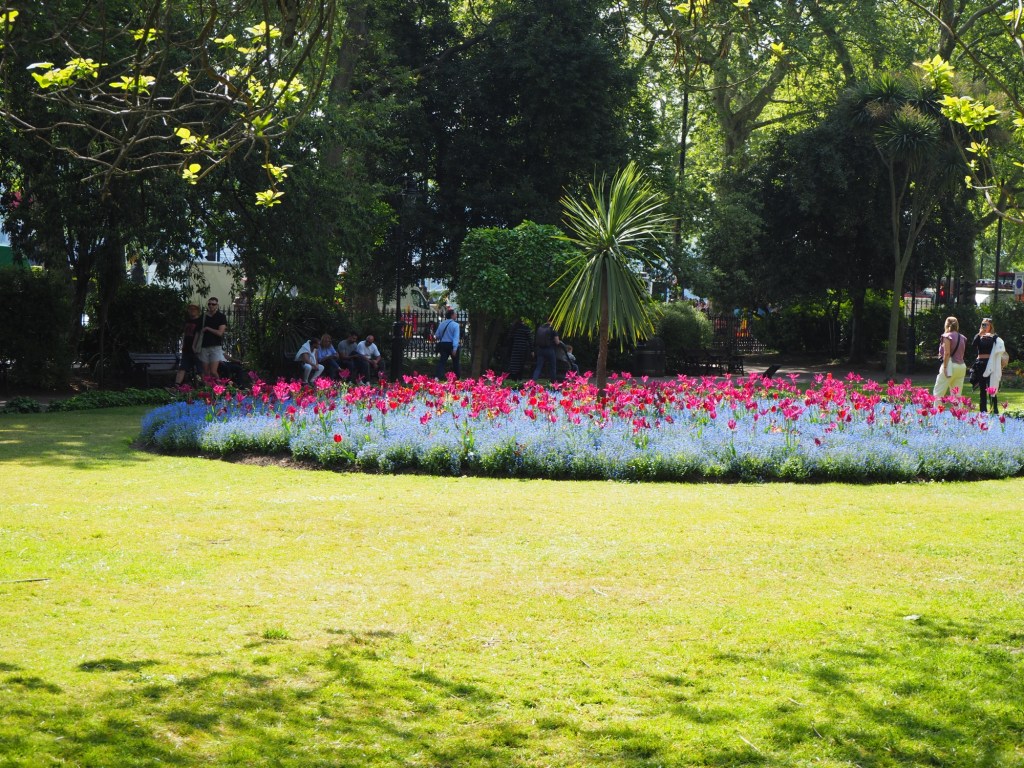
We reached the Embankment and checked out the Embankment Gardens. It was pretty enough but seemed to have attracted several collections of rough looking characters who were gathered in groups drinking beer.
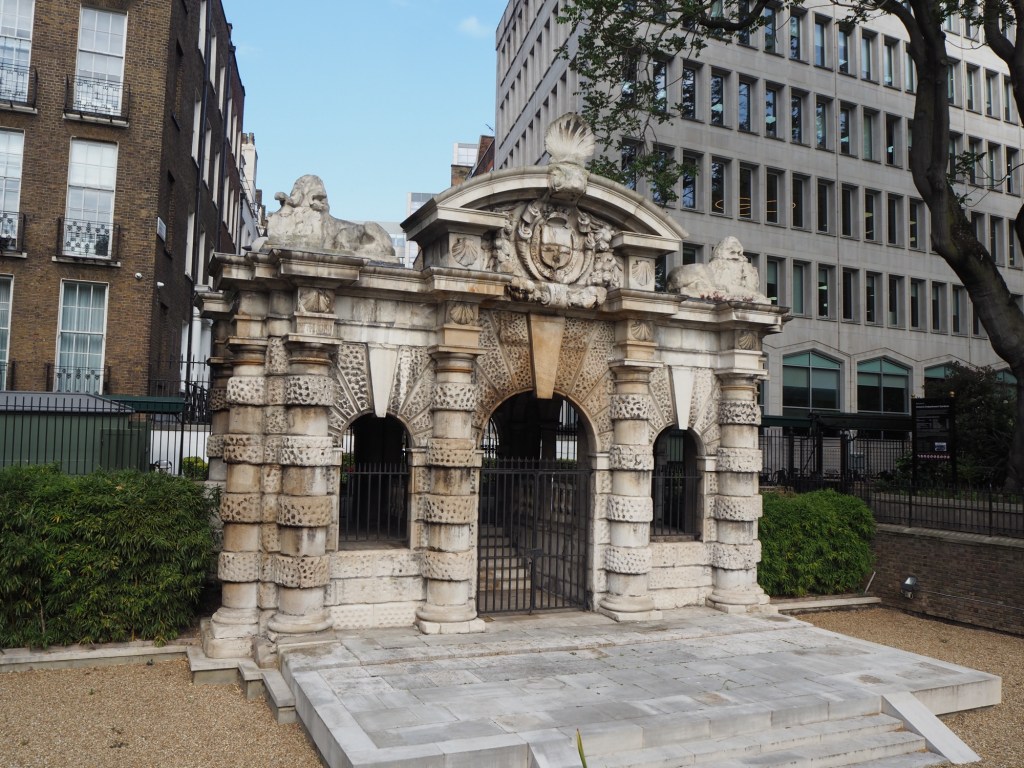
One interesting structure here was a private watergate built in 1624 for the Duke of Buckingham. River improvements undertaken in the 19th Century have left it rather high and dry.
I also found a statue of Sir Arthur Sullivan who is a favourite composer of mine.
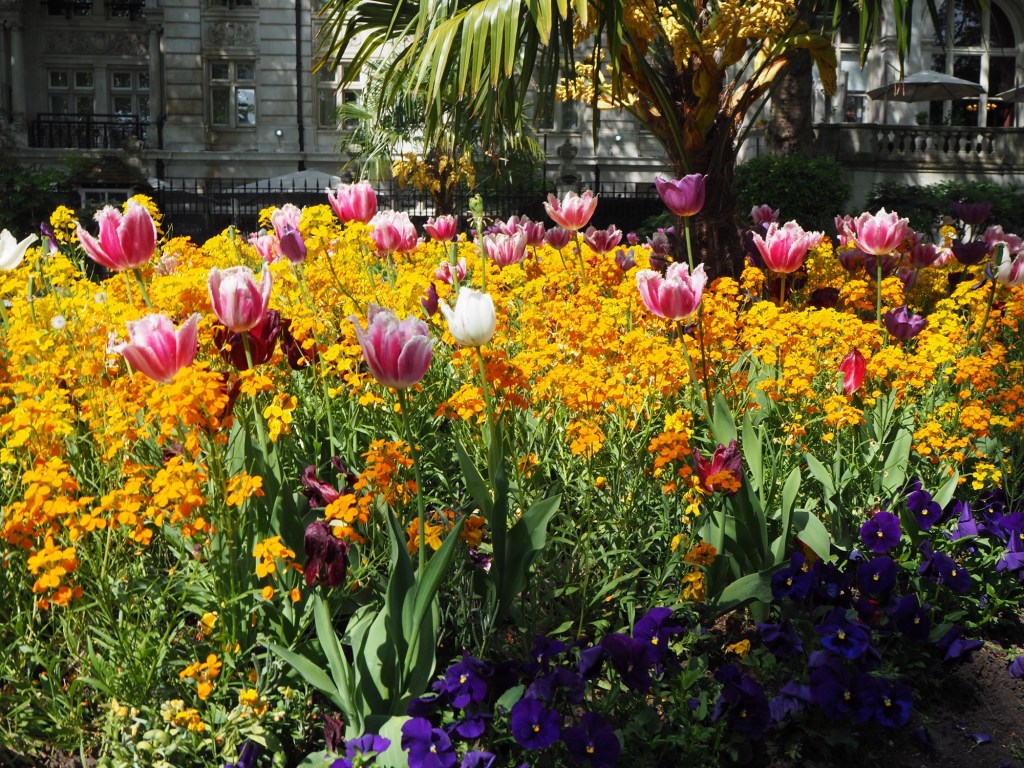
The next park along, Whitehall Gardens, was a lot more up market with magnificent flower beds.
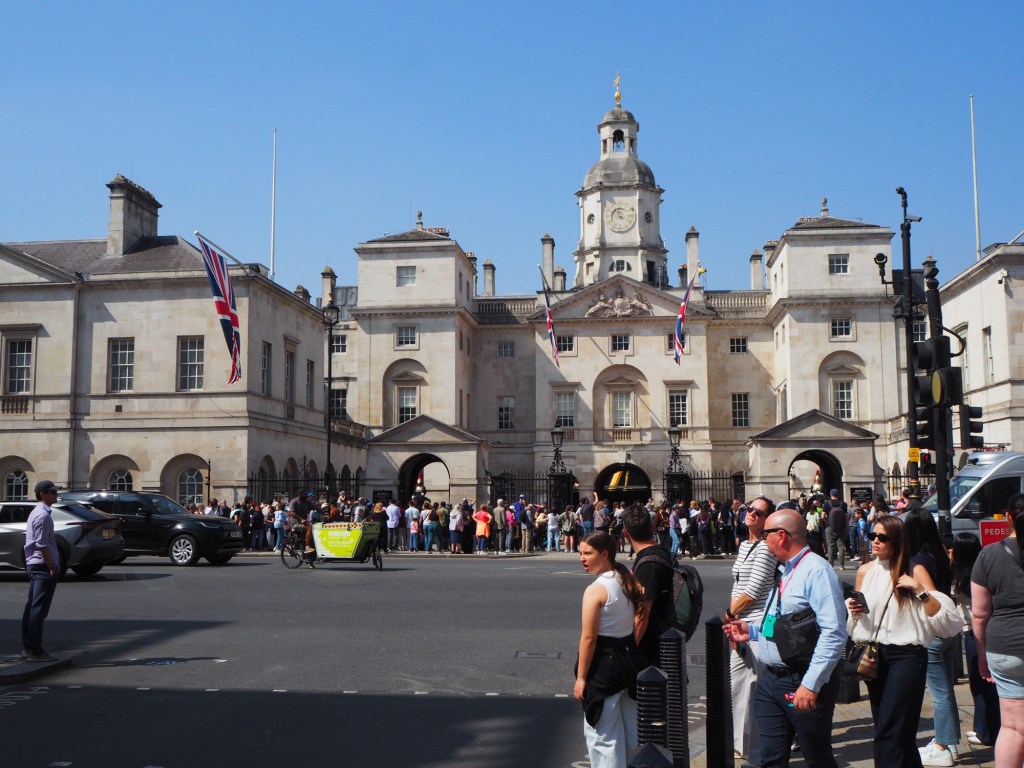
We kept walking inland towards the Horse Guards where the crowds were becoming very thick. There was a half dozen mounted police waiting in a side road so we thought something might be happening but didn’t know when or what.
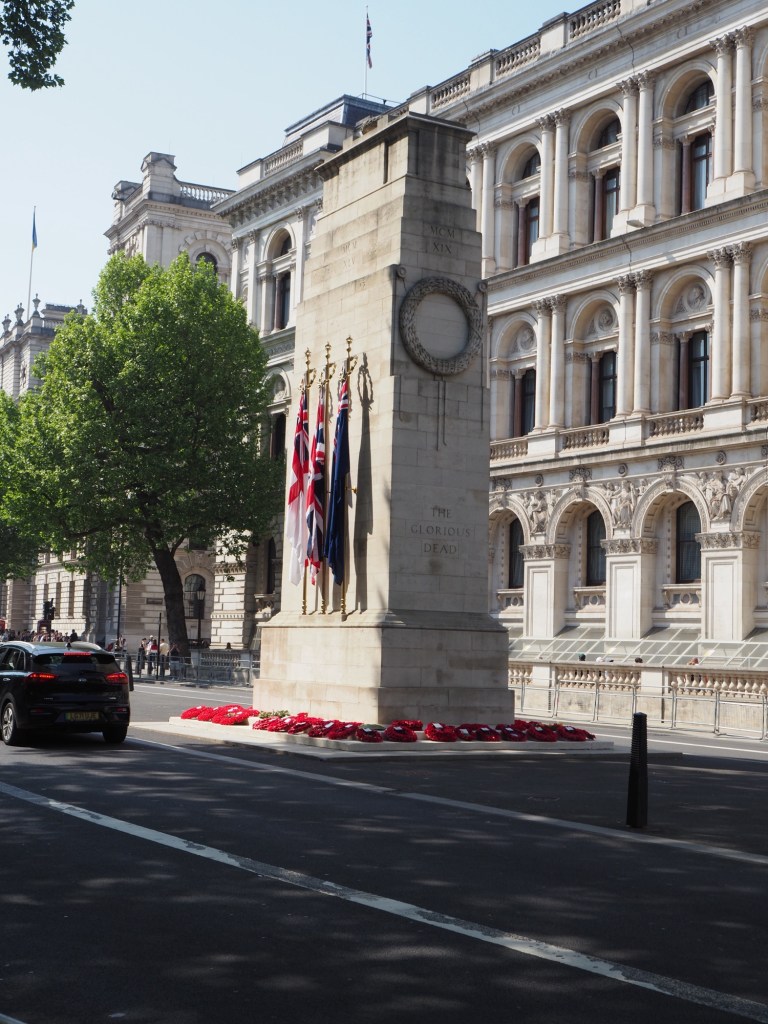
So we pressed on down past the Cenotaph.
The footpaths were crammed with people as we passed Parliament House and admired the newly restored Big Ben tower.
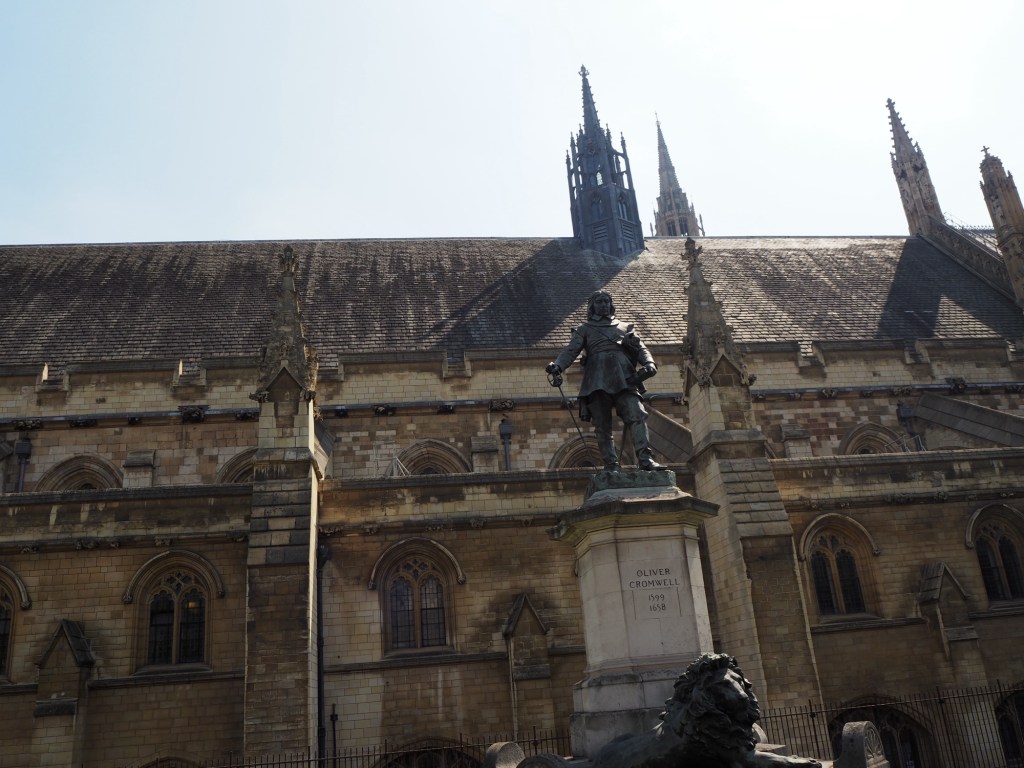
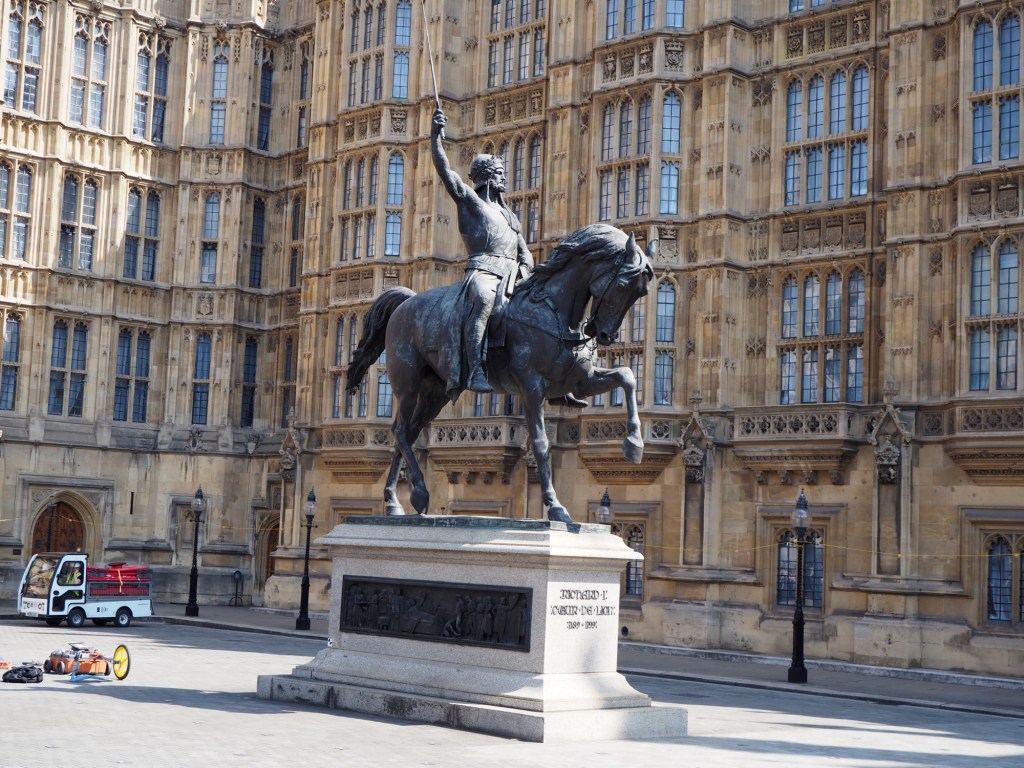
In the surging throng we slowly moved down the side of Parliament, and I got to say hi to Oliver Cromwell’s and Richard the Lion-heart’s statues. After what seemed an eternity, we escaped from the crowds and the road closures and the detours. We hopped the tube and headed back to Paddington where we found a nice little cafe and had a late lunch.
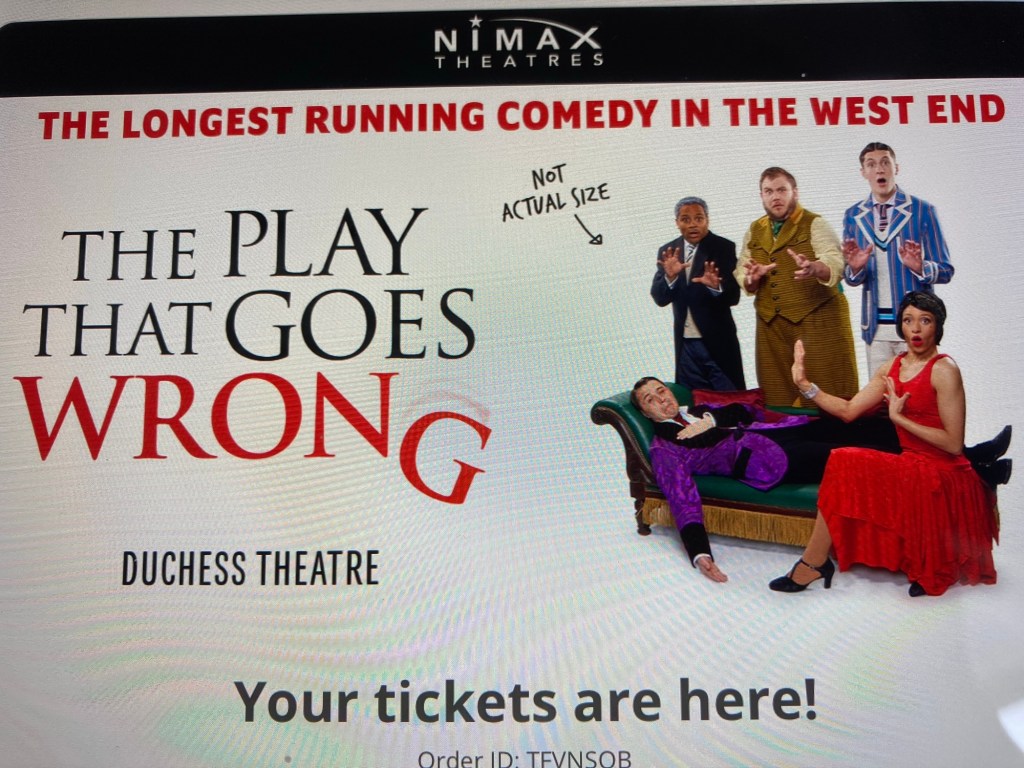
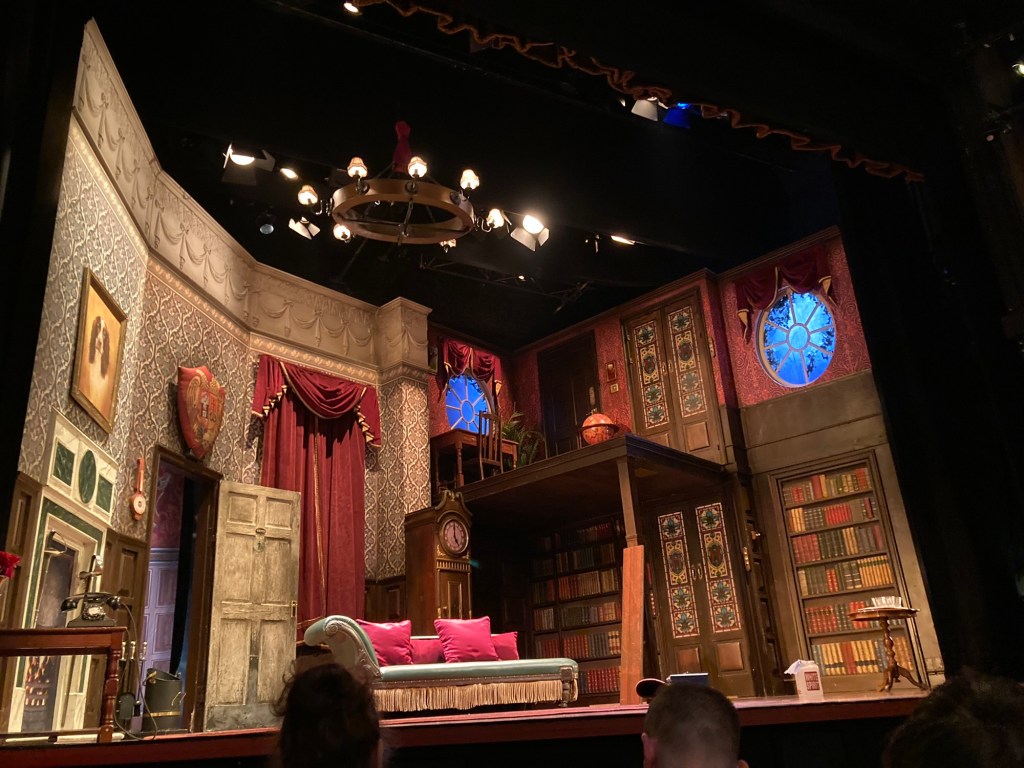
This evening we headed down to Covent Garden where we had a lovely meal at a restaurant called the Banana Tree. We had tickets to “ The Play that goes wrong” at the nearby Duchess Theatre. It was an absolutely hilarious evening.
Jeanette has always wanted to see the Wallace Collection so that was today’s objective. Looking at Maps it turned out to only be a 35 minute walk from our hotel so we proceeded on foot.
One of the traps of London is that the underground system is so extensive, you tend to use it whenever you want to go anywhere and so miss out on seeing great portions of the city.
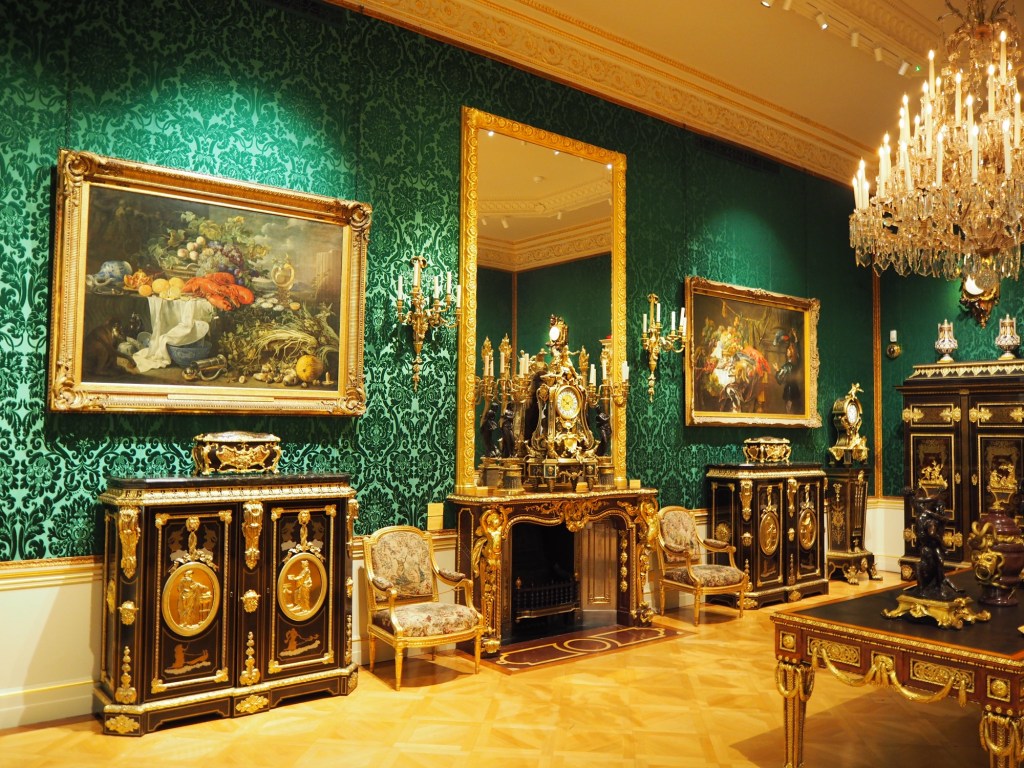
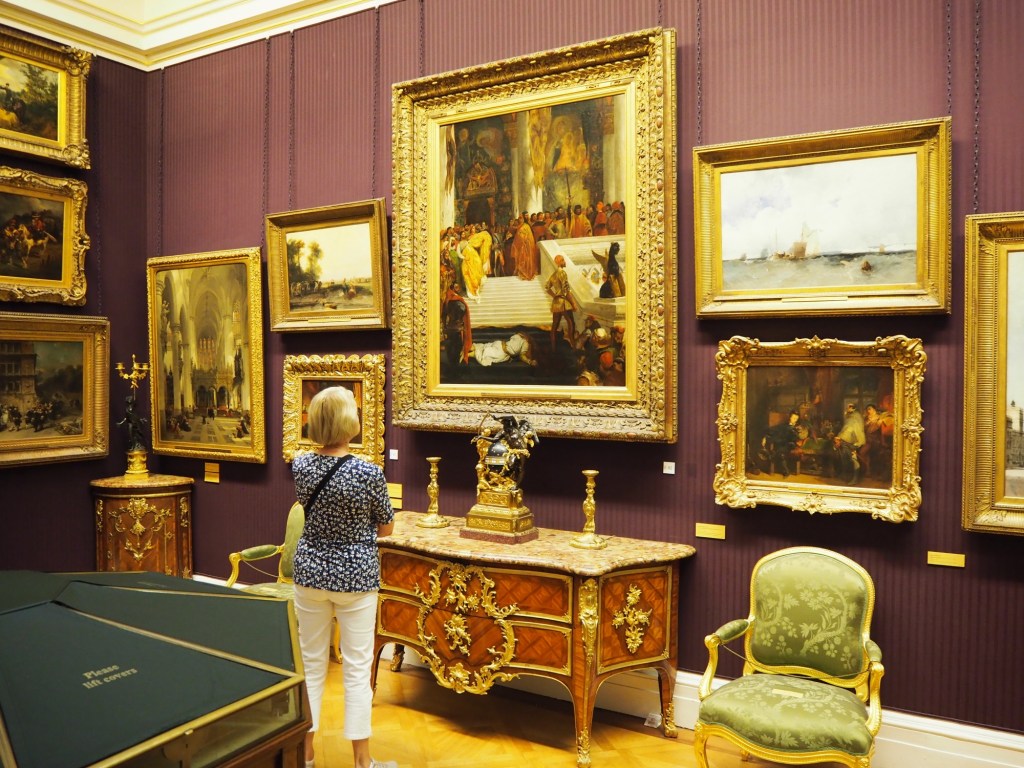
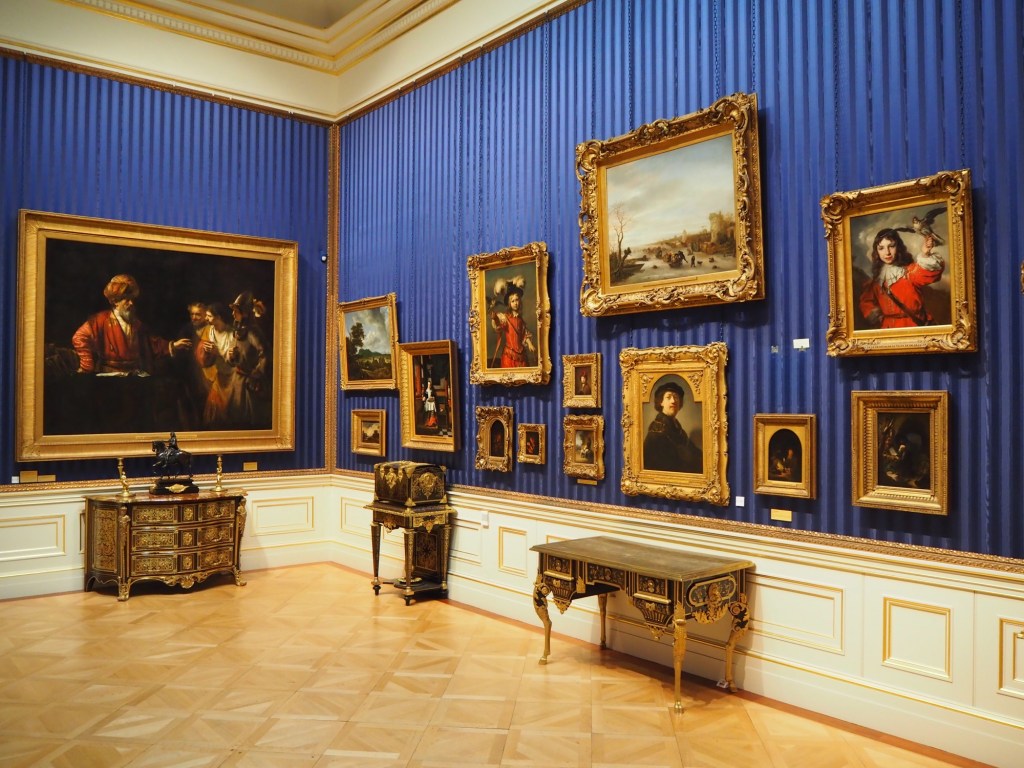
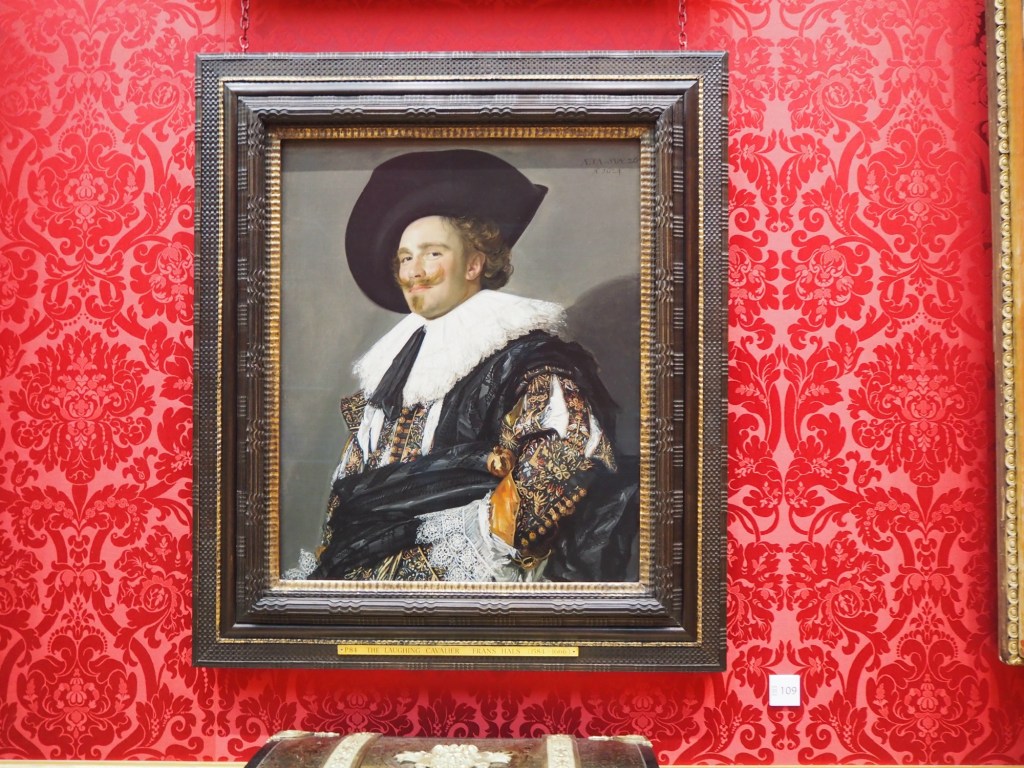
Anyway we duly arrived at the mansion containing the Wallace Collection. The collection comprises numerous artworks, masses of elegant antique furniture and a vast array of armour and weapons.
The upper floor has numerous rooms each decorated in a different style and full of paintings and numerous antiques.
There are some famous works here including the Laughing Cavalier.
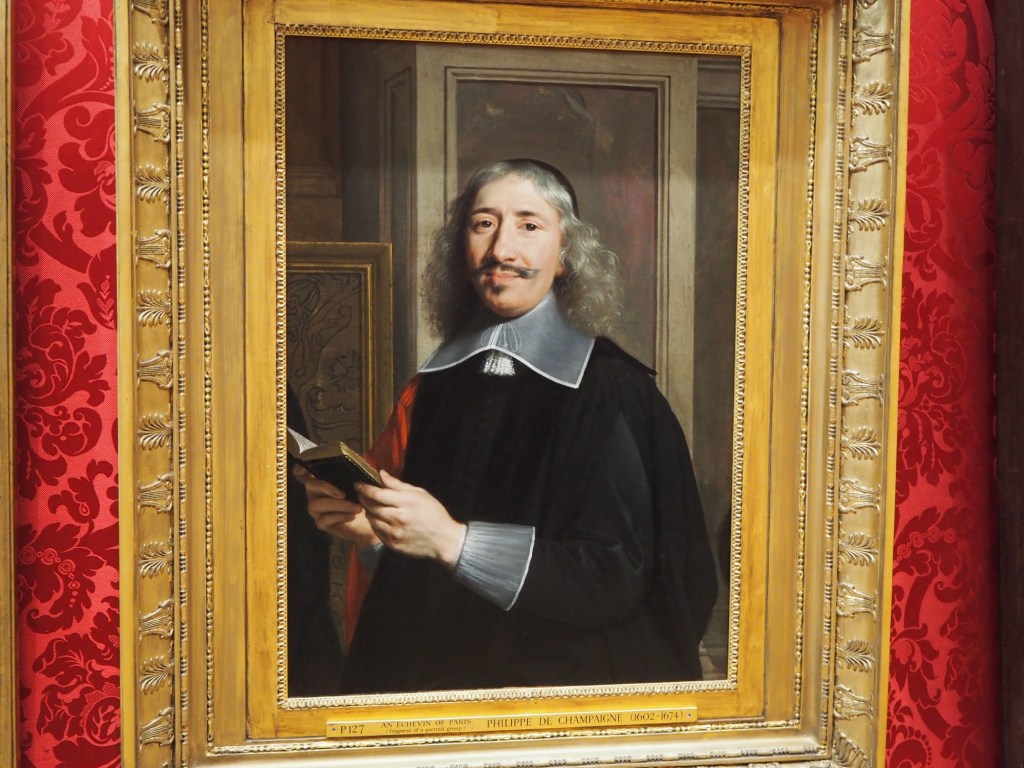
My favourite was this guy. Painted in the 17th Century.
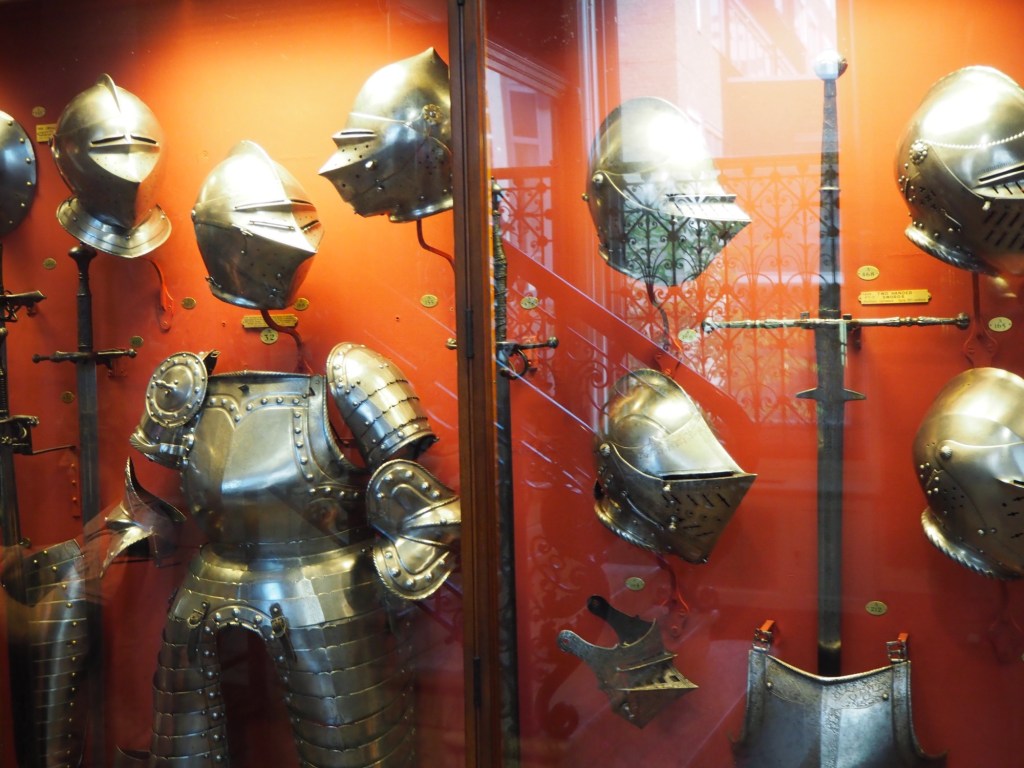
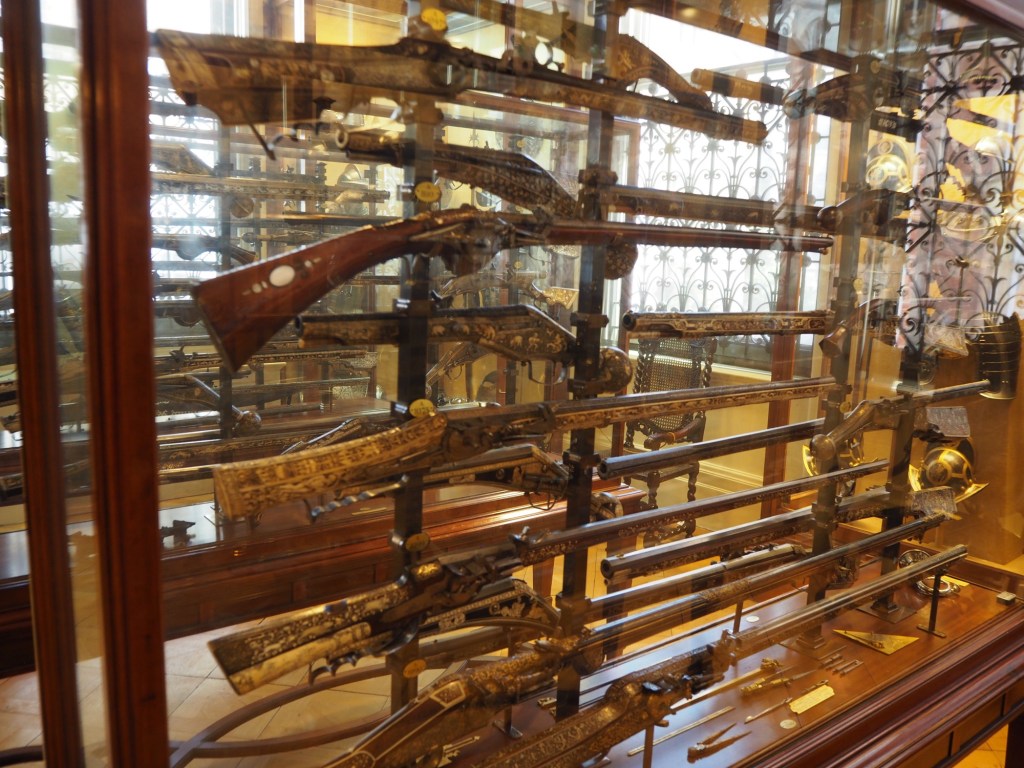
Downstairs was the huge collection of armour, swords, crossbows and firearms. There was even a canon.
The house enclosed a central courtyard where we stopped for coffee. If you are ever in London, it is a must see (and it is free to boot).
Taking out our trusty navigating device we then set off and walked to Oxford Street where Jeanette had some shopping to do. We returned home on the Elizabeth line (London’s latest addition to its underground network). It was very impressive.
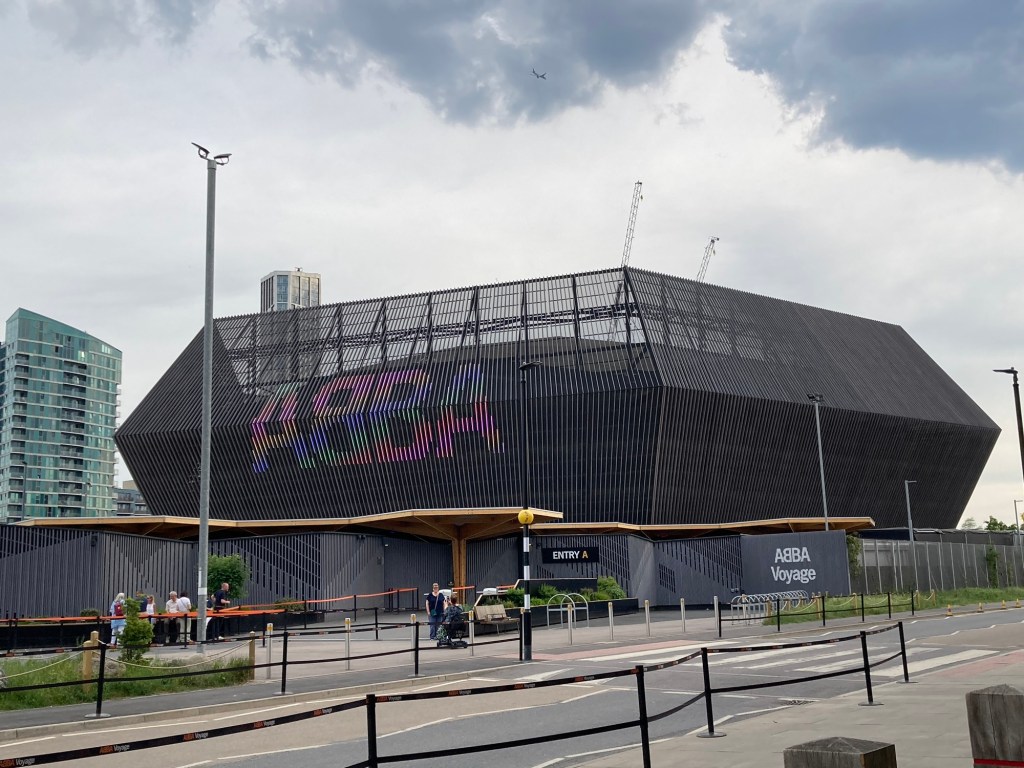
This evening we set out for “ABBA Voyage”. We had arrived at the venue a couple of hours early as we were going to find some place nearby to grab a meal. We were however, out of luck.
The venue was located in the most desolate, depressing industrial wasteland I have ever encountered. Apart from building sites and deserted weed infested blocks, the only other sign of life was a nearby area where some enterprising soul had stacked a row of containers two high and was renting them out as overnight accommodation.
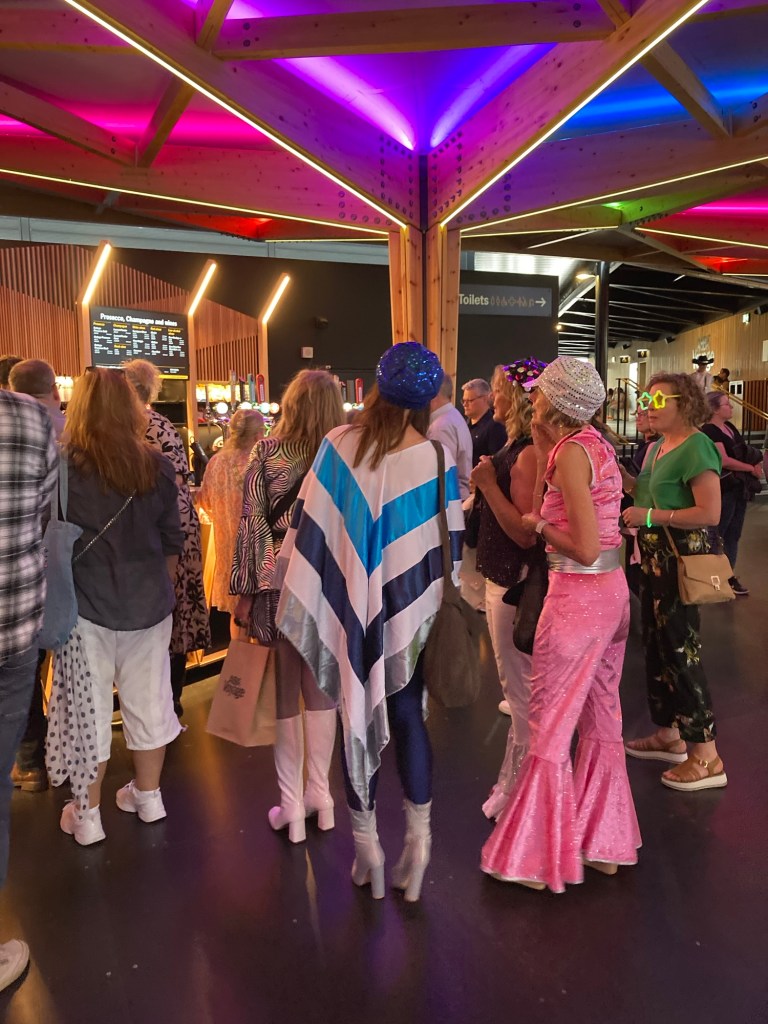
Eventually the venue opened at 6pm and we were able to grab some overpriced venue takeaway so my imminent passing from starvation was adverted. We were entertained while dining by the large numbers who had shown up in their ABBA gear.
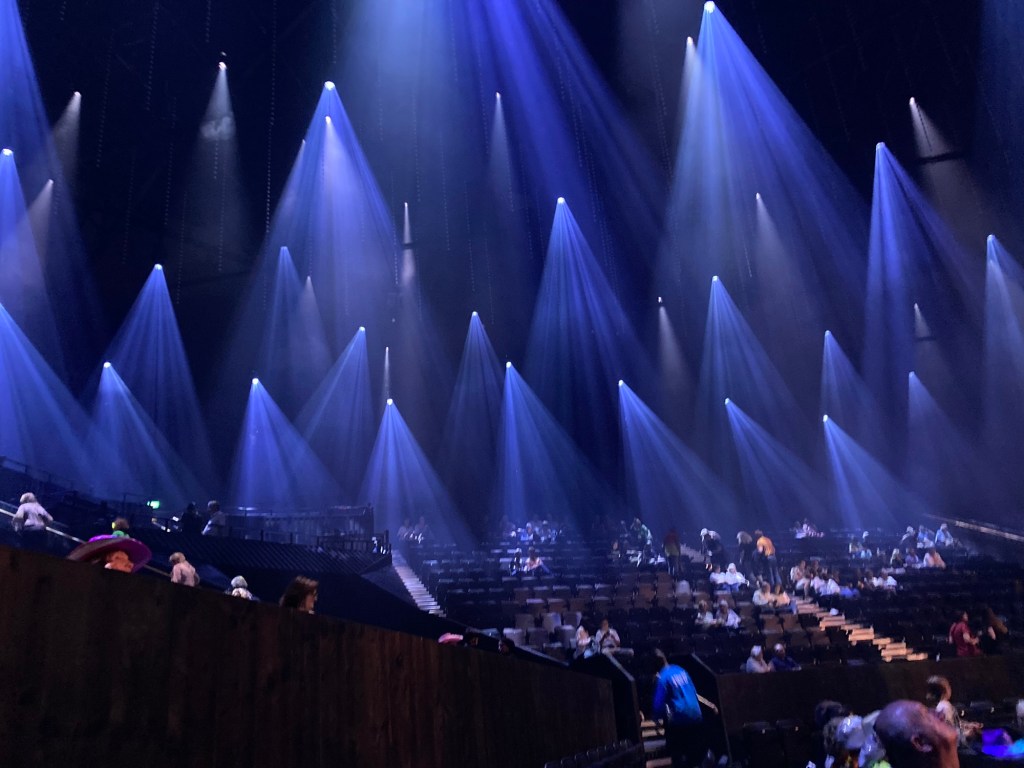
The venue filling up. No photography was allowed during the performance.
The show was fantastic. It really looked like the group was on stage and the place really heaved. The energy in the venue was amazing.
Jeanette has always had a burning desire to see Blenheim Palace and my aging knees have a deep aversion to day long bus trips, which this visit would entail, so we went to the Victoria Coach Station (a rather grand edifice with a somewhat down market interior) and I waved her off on the bus.
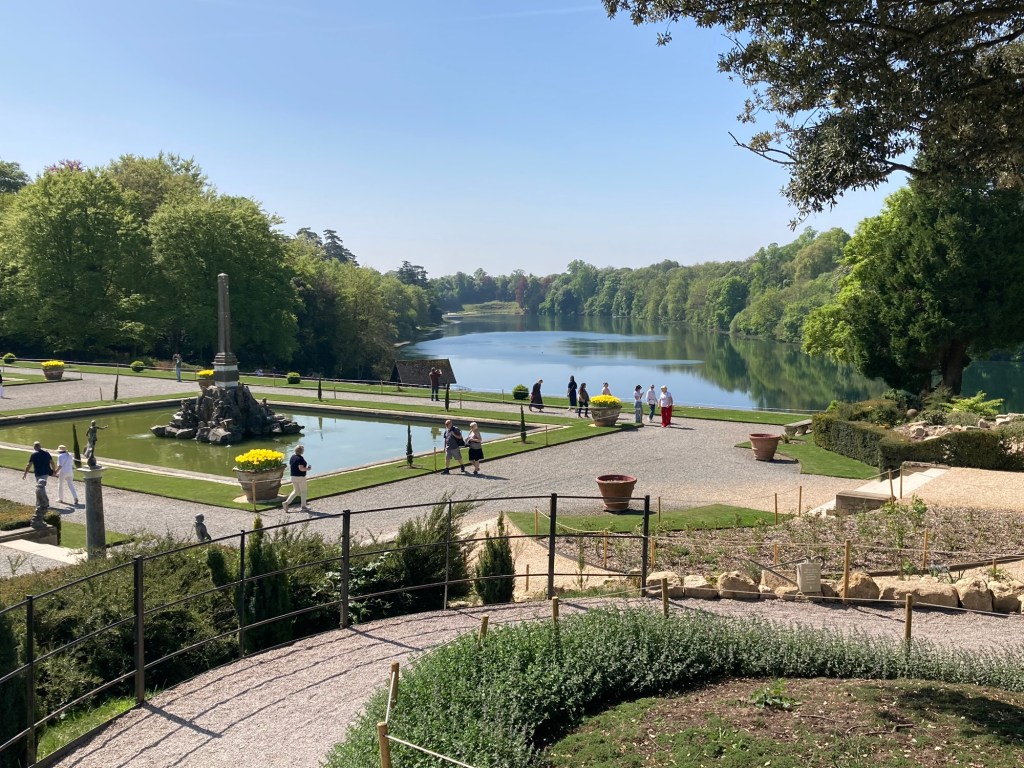
Her first stop was at Blenheim Palace which unfortunately had a major roof replacement renovation in progress and much of it was covered in cladding and scaffolding.
Jeanette writes: The funds to build Blenheim Palace, and its extensive grounds (5,000 acres which had been a Royal hunting ground) were granted to John Churchill, the 1st Duke of Marlborough, by Queen Anne in appreciation after his victory against the French in 1704. It was to be a home, a chapel and a family mausoleum, and was to rival the Palace of Versailles! John’s choice of Sir John Vanbrugh as the architect did not please his wife Sarah, who preferred Sir Christopher Wren! She continually fought with Vanbrugh over his extravagant designs and use of expensive materials. The build was halted when the Churchills fell out of favour with Queen Anne and decided to exile in Antwerp. When Queen Anne died they came back to England and got on with the building. The Duke did get to spend the last few years of his life at Blenheim but it was not finished until after his death and was never formally completed. Sarah completed the works with other architects and refused to allow Vanbrugh near the place so he didn’t get to see it finished either! John and Sarah are buried in the crypt under the chapel there.
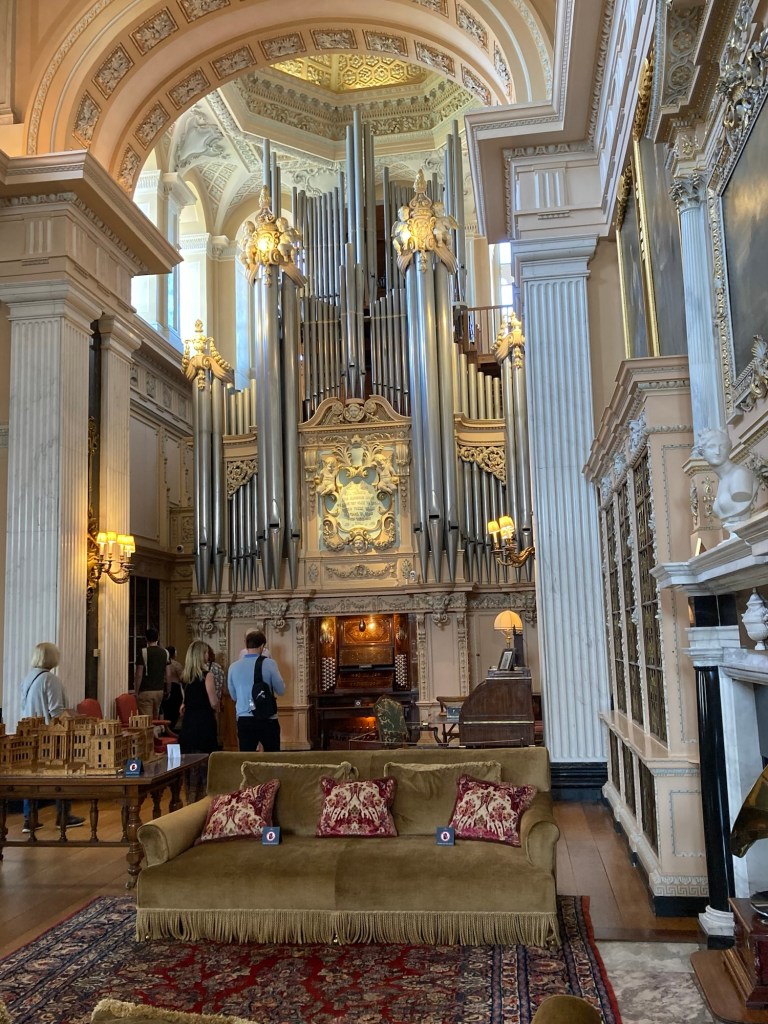
Our guide told us a place can only be called a palace if it belongs to royalty or a religious purpose ie a Pope’s or Bishop’s palace. Blenheim is very much owned by royalty and the Churchills, although living and maintaining Blenheim, pay rent to King Charles for the pleasure. It is a magnificent place filled with the most beautiful artworks, furnishings, and other fine fittings. The huge Library even has a large pipe organ at one end!
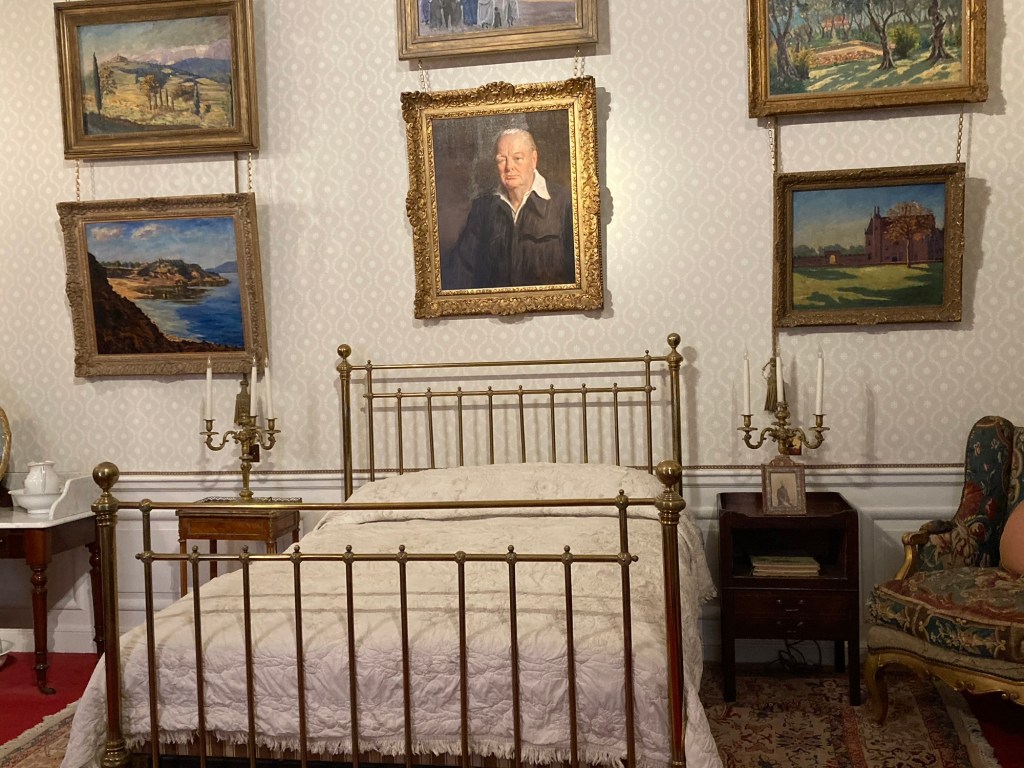
Sir Winston Churchill was born at Blenheim Palace when his parents were attending a weekend function there and his mother went into early labour. He spent a lot of time there with his extended family when he was growing up, but of course never lived there.
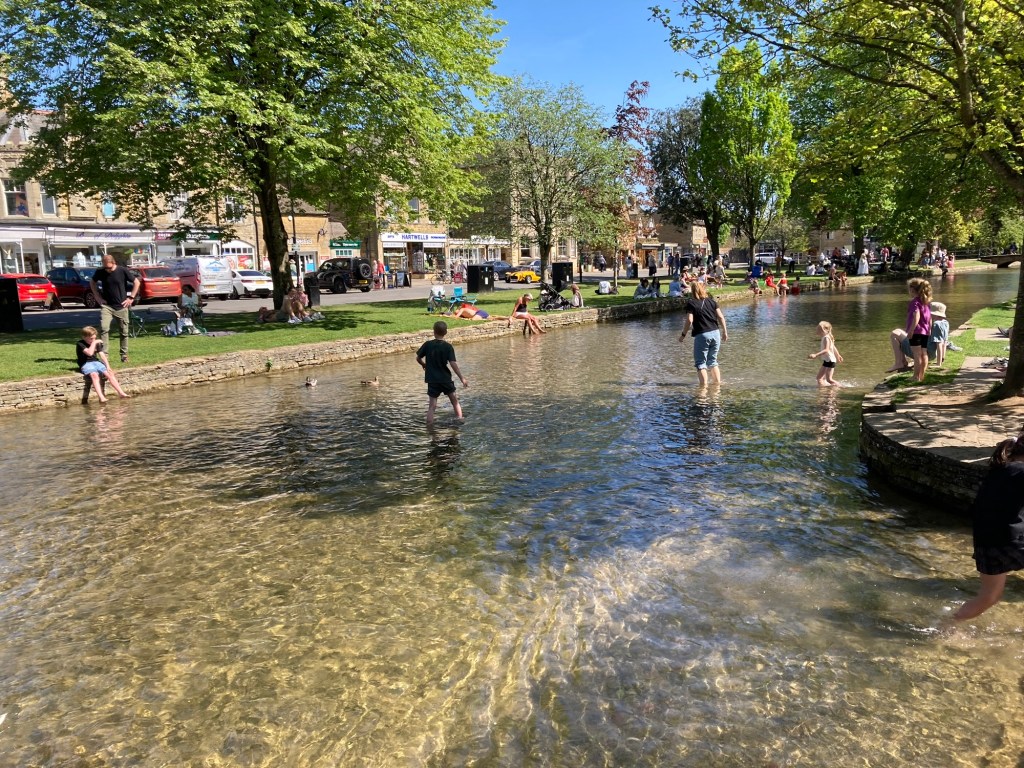
Then we drove on to Bourton on the Water for a lunch break. It is a dear little town in the Cotswolds which has a shallow manmade stream running through it, with five little bridges, very close together, to cross it. Sheep were the main activity in this area in earlier times and the stream was created to provide a place for the women to wash the fleeces. Today it is more like a little water playground for visitors.
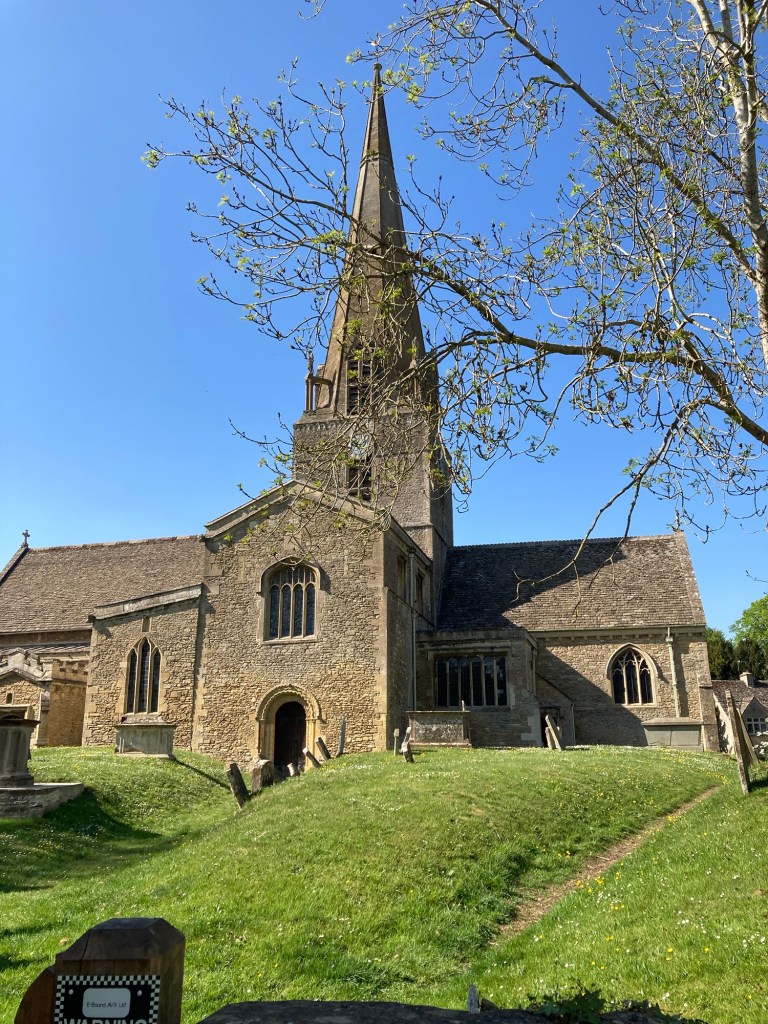
The final stop for the day was Bampton Village, the church and some buildings of which were used in the filming of Downton Abbey – namely Mrs Crawley’s house, the post office, the two pubs and the hospital. We were able to go into the church and to walk through the incredibly old gravestones surrounding it.
It was a long, slow drive back into London in peak traffic and I finally staggered back into the hotel after 7pm, almost 12 hours after leaving it. Brian was rested and ready for dinner so we wandered off to the very good Italian restaurant not far from the hotel for an excellent meal and a welcome glass of wine! A great day.
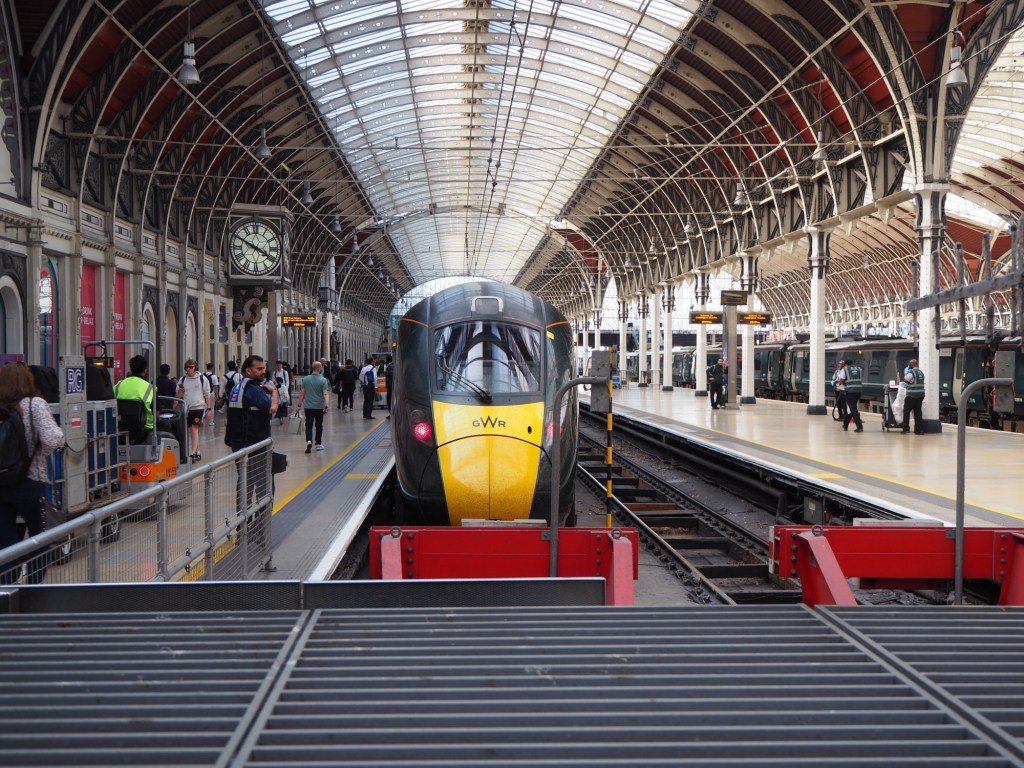
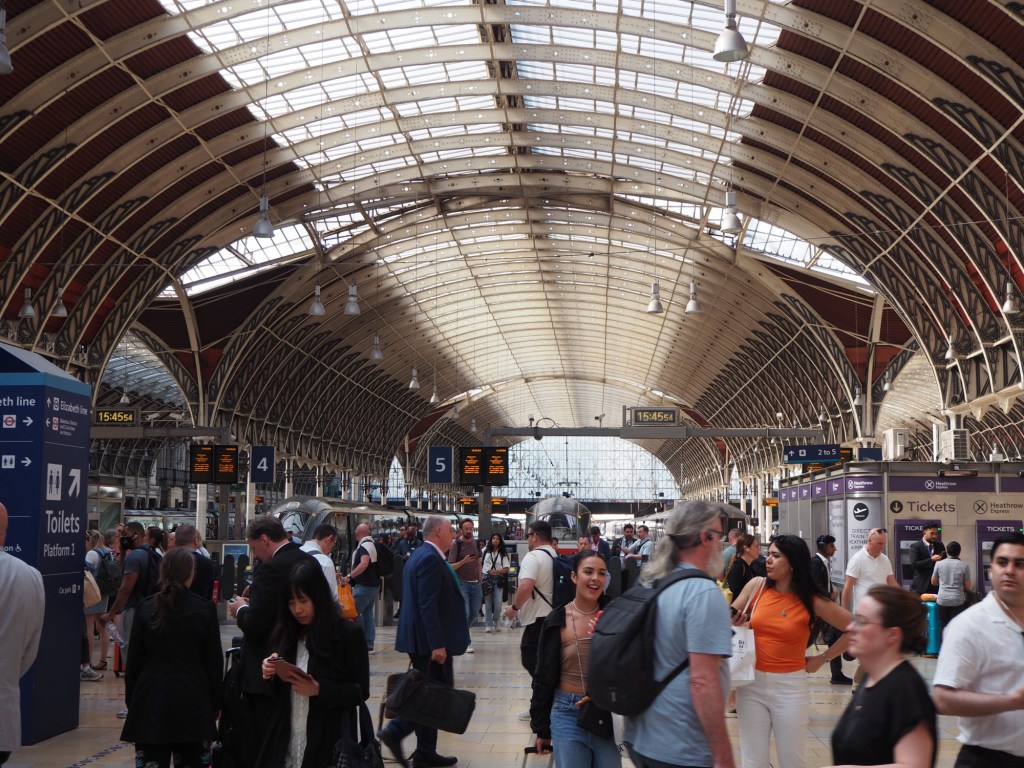
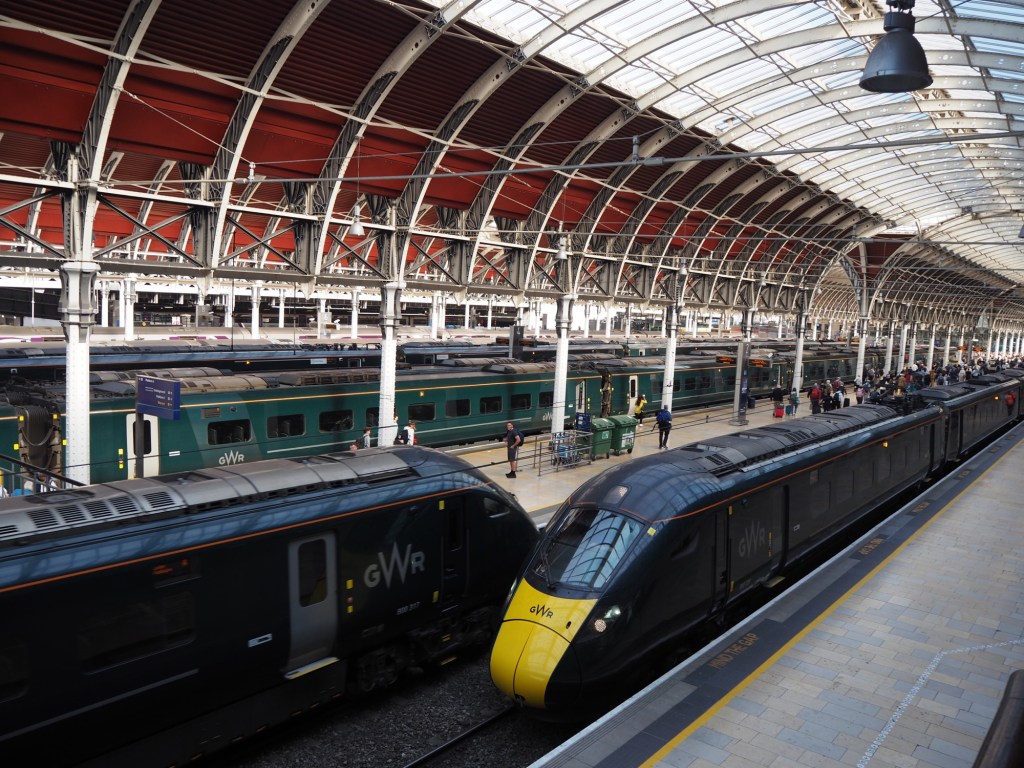
Brian continues – As for me I had a bit of a nap then went for a wander around Paddington. Not a lot to see apart from Brunel’s masterful Paddington Station
Equally the passenger trains that are operated out of there by the current day Great Western Railway company are very beautiful.
















 Hardys’ Travels