Today Jeanette and I went our separate ways. I was off to the Airborne Museum and Jeanette headed for the Dutch National Heritage Open Air Museum.
It turned out that Jeanette had the more exciting time but I will tell you a bit about my day first then hand over the keyboard to Jeanette.
The Airborne Museum attempts to provide a history of the largest Airborne operation every undertaken when the Allies tried to capture the bridges across the Rhine at Arnhem. Due to an underestimation of German fighting capacity and poor reconnaissance, the lightly armed airborne troops were dropped right on top of two German armoured divisions and the mission failed.
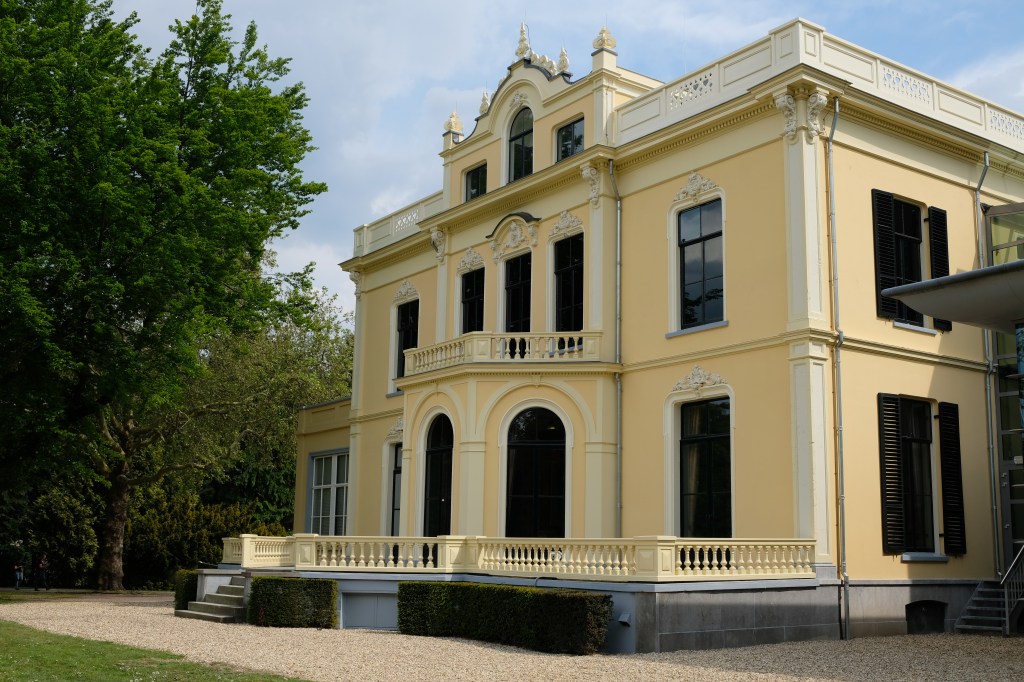
The Airborne Museum is in a Chateau that the General in charge of the British Airborne Division chose to use as his headquarters. Seeing it I could not help thinking of Field Marshall Bill Slim in one of his books confessing that as a Lieutenant in WW1 that he used to imagine if he ever made General, he would direct his battles from a chateau where he could sleep on clean sheets and have a nice wine with his lunch. He wound up as a General fighting in the desert and in the jungle so his wish never came true and I don’t think the General here got to enjoy Chateau life much either.
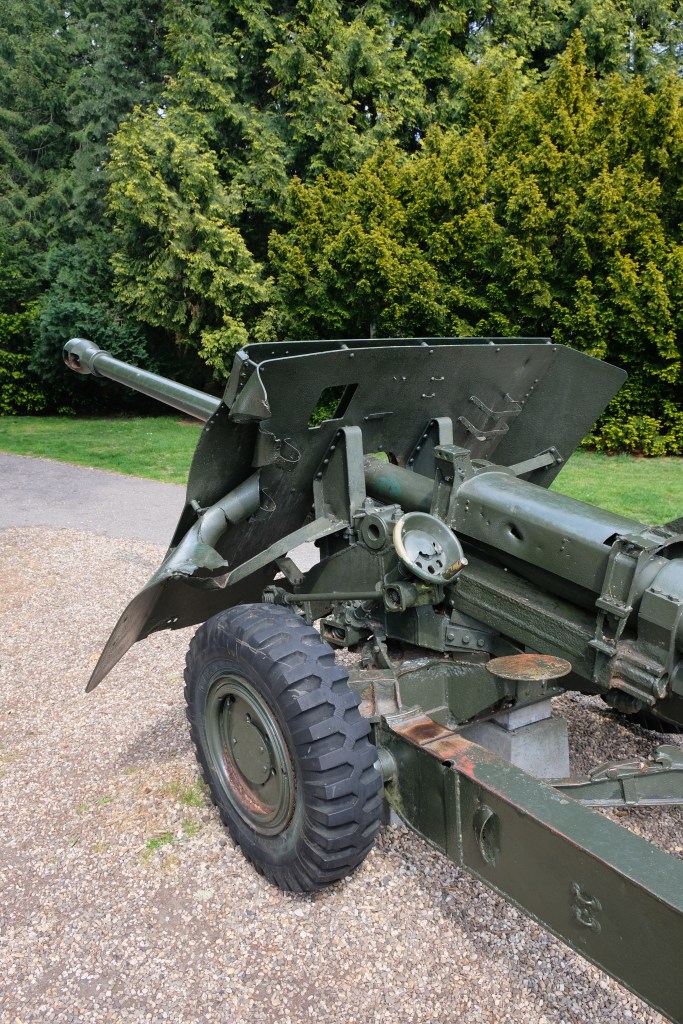
The museum had some interesting artifacts but had mostly succumbed to the modern trend of large blown up photos with flashing lights and interactive computer games for the kiddies.
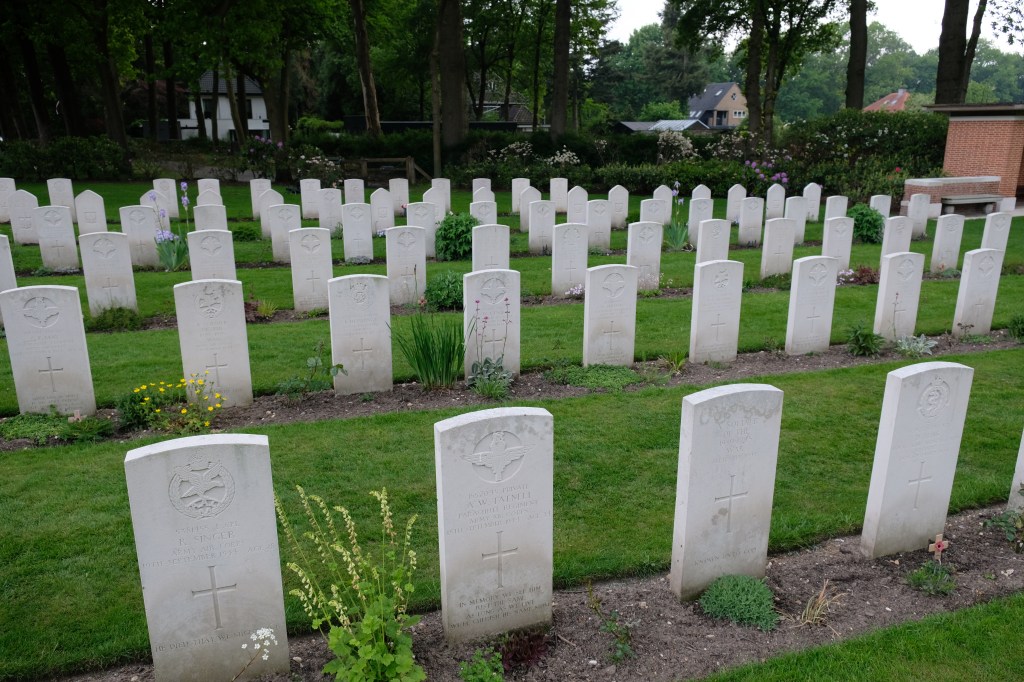
Our group also visited the war cemetery where the British and Polish troops who were lost here are buried. A very impressive place. The thing that struck me most were the wide variety of corps and regiments that were involved here.
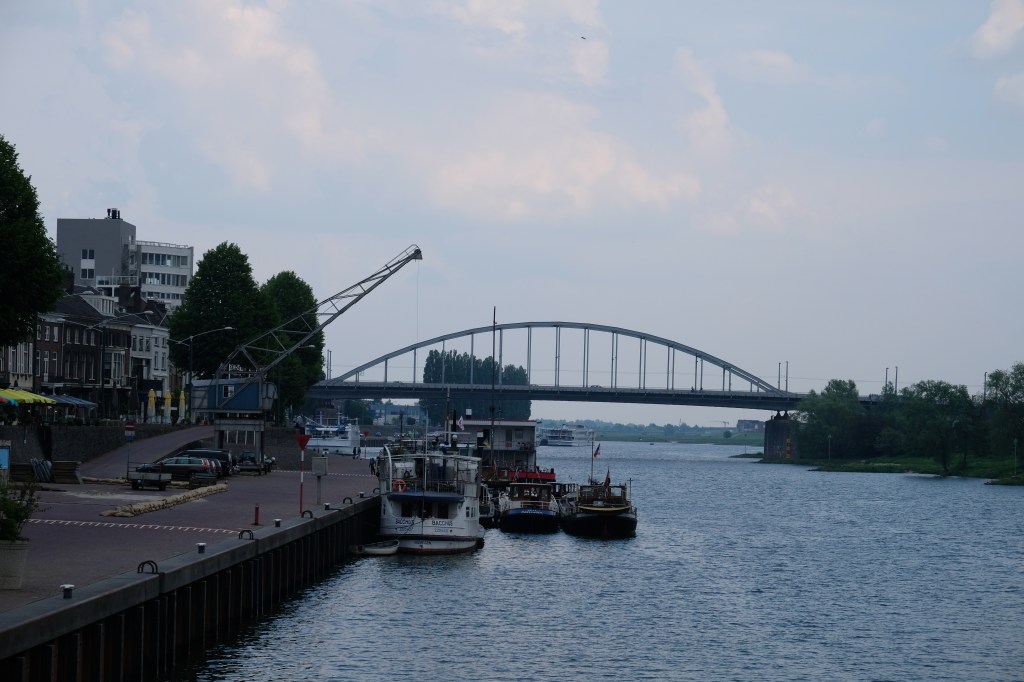
Here is a photo of the Arnhem bridge. The bridge today is a rebuilt version as the original was destroyed in the subsequent fighting. It is now named the John Frost Bridge after the Lt Colonel whose men managed to capture and hold it for several days
Jeanette ventured out to the Netherlands National Heritage Open Air Museum – The bus assigned to our group came to grief not far from the port. Lots of cars were honking their horns at us and one driver managed to tell our bus driver, while we were stopped at the traffic lights, that there were plies of smoke coming out of the back of the bus. We could smell the awful smell but thought it was just the big recycling incinerator we were passing. They dropped us all out of the bus at a hotel, where they served us drinks as we waited for a replacement bus. Then we continued on our way.
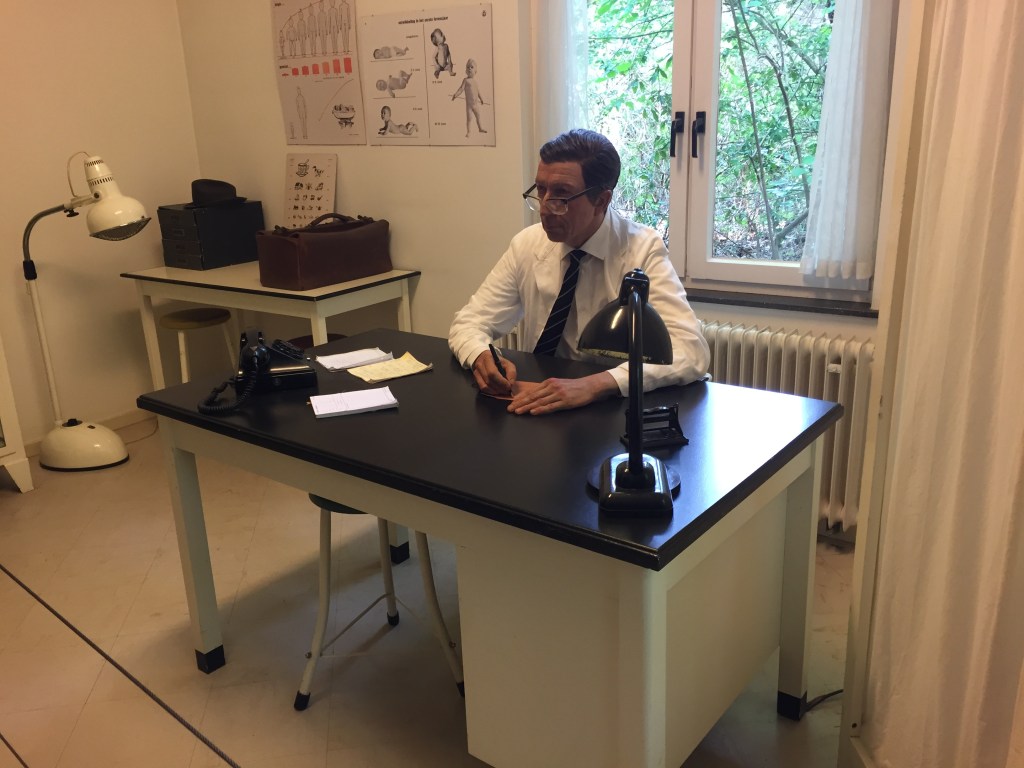
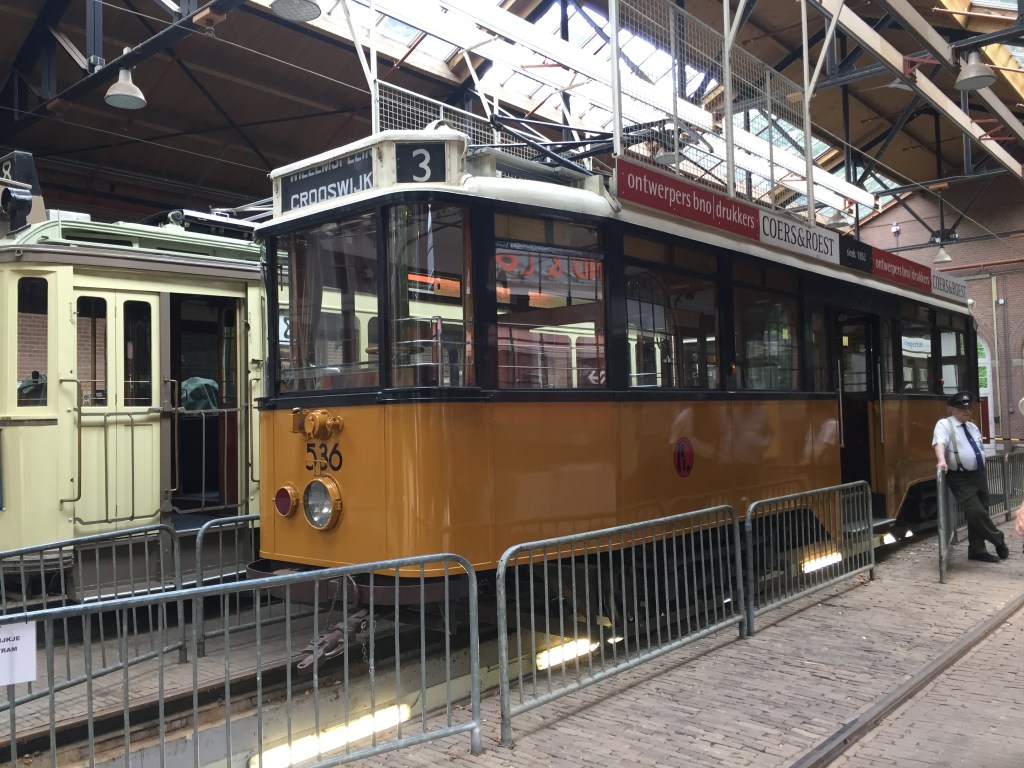
They seem to go in for open air museums over here and this one was fabulous. Set on 108 acres, it had a collection of trams that used to ply the streets of Rotterdam until the 1960s, on a circular route around the site, where it was possible to hop on and off at various locations. The museum depicted life in the Netherlands over the last 100 years – there was a health centre with all sorts of gruesome medical instruments, where they managed TB infection and monitored babies and young children, as well as general medical care. The displays were very lifelike.
There was a working blacksmith, an amazing laundry with big timber mechanised washing wooden barrels that pummelled the life out of the clothes, sheets, etc.
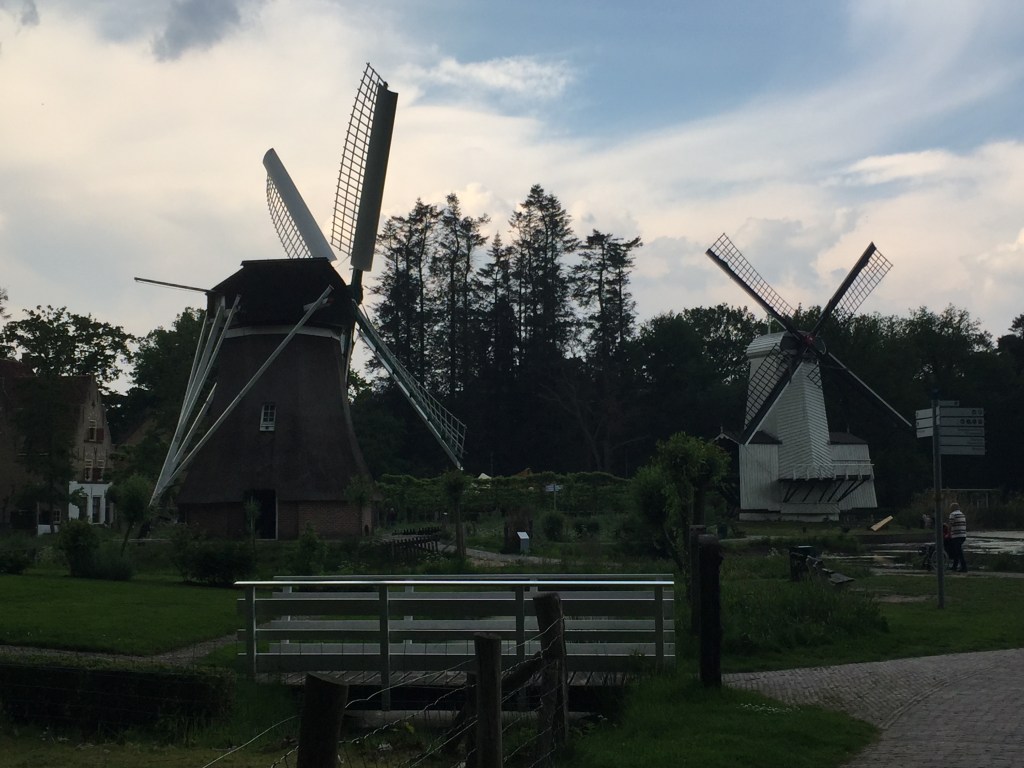
There was a beer brewery, which gave us a taste, a paper making outfit, strange looking sheep, lots of wind mills, and family homes, and even a wayside chapel the size of a cubby house.
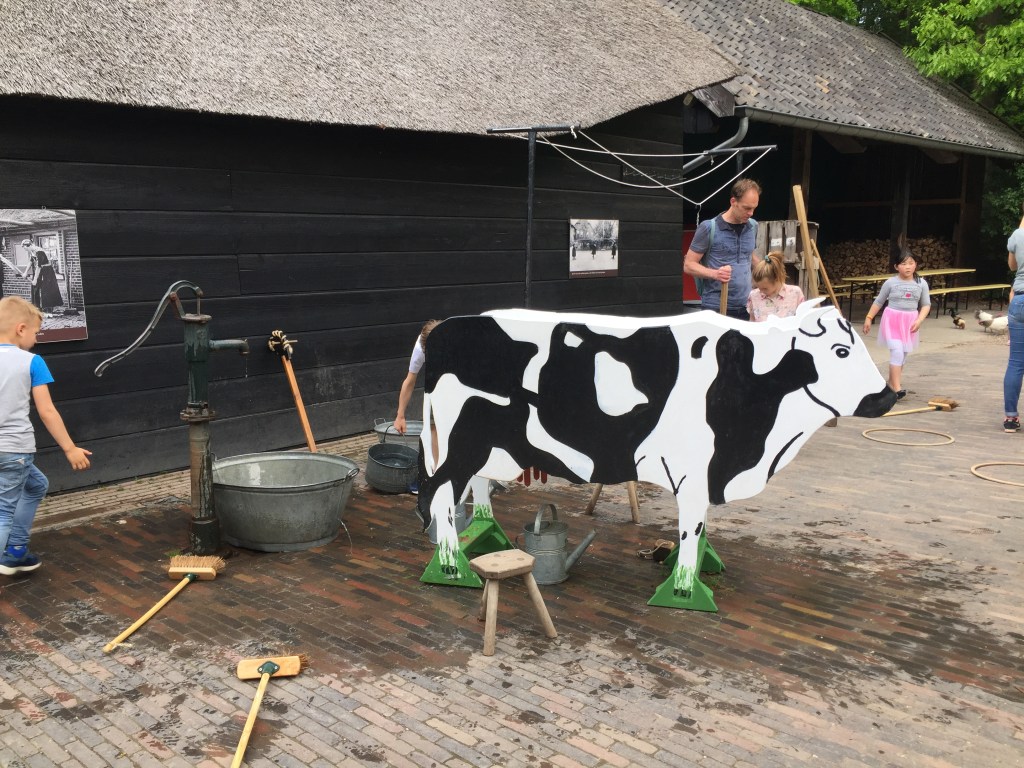
There was an activity centre for children where they could learn to milk a cow and do the washing the old fashioned way (ie by hand). So much to see and very well done.

 Hardys’ Travels